Data-Driven Parking Policy Pays Off in Seattle


Seattle is set to improve upon its successful street parking program by setting meter rates based on demand.
The Seattle Department of Transportation keeps a close watch on curbside parking, reports Stephen Fesler at The Urbanist, with regular audits and adjustments to rates and hours for close to 12,000 spaces. SDOT’s goal is to reduce congestion, noise, and pollution by helping motorists find parking more easily. Increasing turnover also helps businesses by improving access.
It’s a common sense approach that gets results. Writes Fesler:
The paid parking program is managed on the basic principles of supply and demand. With a limited number of available parking spaces and inconsistent demand throughout areas and time, SDOT uses price and time limits to manage how consumers choose to occupy space and smooth out utilization.
With this in mind, SDOT’s primary goal of the paid parking program is to maintain an average of one to two open parking spaces per blockface throughout the day. This typically translates to 70% to 85% parking utilization, a key metric for SDOT.
This year the city will begin to expand variable parking rates, adjusted based on demand at a given time, to the entire system:
[P]erhaps the biggest change that SDOT will make this year is full-scale implementation of time of day (TOD) paid parking. Harnessing new technologically advanced parking pay stations, SDOT will be able to charge different parking rates depending upon the hour.
Fesler says time-of-day rates are expected to be in place systemwide by the end of 2016. “Once the pay stations are installed in all neighborhoods, SDOT will be able to fine tune pricing beyond the current blunt rate structure,” he writes.
Elsewhere on the Network: Walking the Walk concludes that the U.S. doesn’t really care about traffic deaths, and GJEL Accident Attorneys examine an Oakland intersection that just might have the dumbest pedestrian signal in the world.

Read More:
Streetsblog has migrated to a new comment system. New commenters can register directly in the comments section of any article. Returning commenters: your previous comments and display name have been preserved, but you'll need to reclaim your account by clicking "Forgot your password?" on the sign-in form, entering your email, and following the verification link to set a new password — this is required because passwords could not be carried over during the migration. For questions, contact tips@streetsblog.org.
More from Streetsblog USA
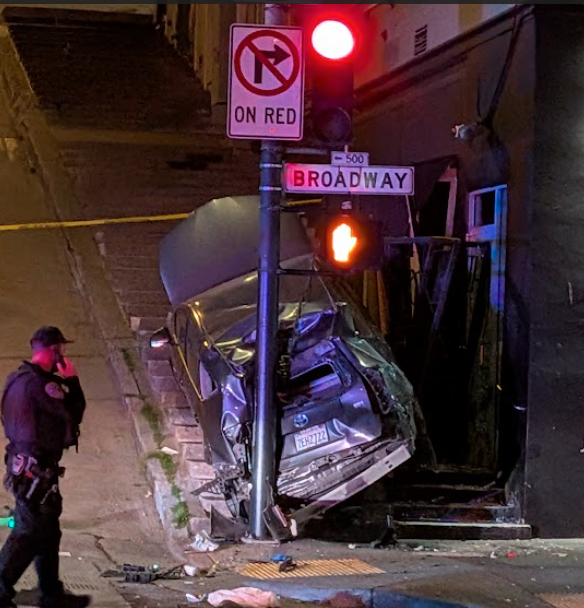
Motorist Careens onto North Beach Sidewalk, Killing Pedestrian
Driver kills pedestrian at another location where a safety project festered
The post Motorist Careens onto North Beach Sidewalk, Killing Pedestrian appeared first on Streetsblog San Francisco.