Will Private Transit Startups Help or Hurt Public Transit?
The rise of private transit operators like Bridj, Leap, and Uberpool has raised questions about equity in places including the Bay Area, where such services are fast replicating. A related issue is the impact they will have on traditional public transit systems.
Private transit vehicles have been described as “like a lounge on wheels,” with amenities like leather seats, refreshments, and Wi-Fi for those who are willing and able to pay.

Jarrett Walker, a transit consultant who blogs at Human Transit, says he thinks the ultimate impact — good or bad — depends on a few factors.
If microtransit co-ordinates with conventional big-vehicle transit, we get (a) lower overall Vehicle Miles Traveled, emissions, and congestion, and (b) stronger cases for transit-oriented land use and thus (c) better, more humane and inclusive cities. If they compete with it, drawing away customers from big vehicles into smaller ones, we get the opposite.
If it turns out to be a fight, the playing field would have to be leveled in terms of the overwhelming public sector cost drivers such as workforce compensation and Federal regulatory burden before we have a fair fight. (And I mean leveled upward, toward fair wages and policies that respect the civil rights agenda encoded in Federal transit regulations.)
If it were a fair fight, high-volume urban transit (not just rapid transit but also high-volume frequent local bus lines) would continue to prevail where it’s the best use of both labor and scarce urban space. My fear is that it’s going to be an unfair fight, one that’s only made worse when the media frame it as ‘little enterprising’ upstarts vs ‘big, old’ agencies. In such an unfair fight, the upstarts can too easily win through means that are destructive to justice and the environment (low wage “contractors”, replacing space-efficient big vehicles with smaller ones) rather than through finding the most efficient equilibrium for all the transport needs of a city.
Elsewhere on the Network today: The Wash Cycle pushes back against the notion that rides per bike is the best way to measure the success of bike-share systems. Bike Walk Lee reports that while no one is paying attention, southwest Florida is making big strides on sustainable transportation. And Streets.mn critiques Minnesota’s habit of removing crosswalks.

Read More:
Streetsblog has migrated to a new comment system. New commenters can register directly in the comments section of any article. Returning commenters: your previous comments and display name have been preserved, but you'll need to reclaim your account by clicking "Forgot your password?" on the sign-in form, entering your email, and following the verification link to set a new password — this is required because passwords could not be carried over during the migration. For questions, contact tips@streetsblog.org.
More from Streetsblog USA
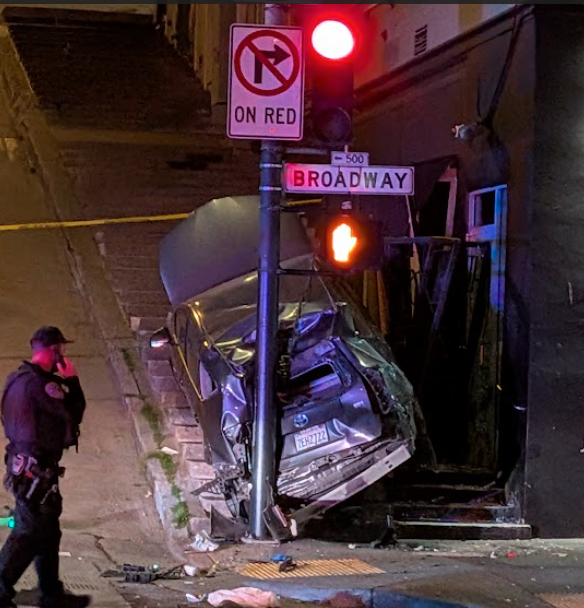
Motorist Careens onto North Beach Sidewalk, Killing Pedestrian
Driver kills pedestrian at another location where a safety project festered
The post Motorist Careens onto North Beach Sidewalk, Killing Pedestrian appeared first on Streetsblog San Francisco.