Sprawl Costs the Public More Than Twice as Much as Compact Development

How much more does it cost the public to build infrastructure and provide services for sprawling development compared to more compact neighborhoods? A lot more, according to this handy summary from the Canadian environmental think tank Sustainable Prosperity.
To create this graphic, the organization synthesized a study by the Halifax Regional Municipality [PDF] in Nova Scotia, and the research is worth a closer look.
Halifax found the cost of administering services varied directly in proportion to how far apart homes were spaced. On the rural end, each house sat on a 2.5 acre lot. On the very urban end, there were 92 people dwelling on each acre. Between those two extremes were several development patterns of varying density.

Researchers evaluated how much of a given type of infrastructure — like roads or water mains — is needed for each type of development, then calculated the associated capital and maintenance costs per capita. They also determined how factors like travel distances and population density affected the cost of services like fire fighting.
The chart below goes into more detail (all costs are in Canadian dollars). The most sprawling areas impose three times the annual cost per household as the most compact areas. For hard infrastructure like water, sewers, and roads, the high cost of sprawl is even more stark — “ten times the cost of other patterns” over the lifecycle of the investment, according to the authors.


Read More:
Streetsblog has migrated to a new comment system. New commenters can register directly in the comments section of any article. Returning commenters: your previous comments and display name have been preserved, but you'll need to reclaim your account by clicking "Forgot your password?" on the sign-in form, entering your email, and following the verification link to set a new password — this is required because passwords could not be carried over during the migration. For questions, contact tips@streetsblog.org.
More from Streetsblog USA
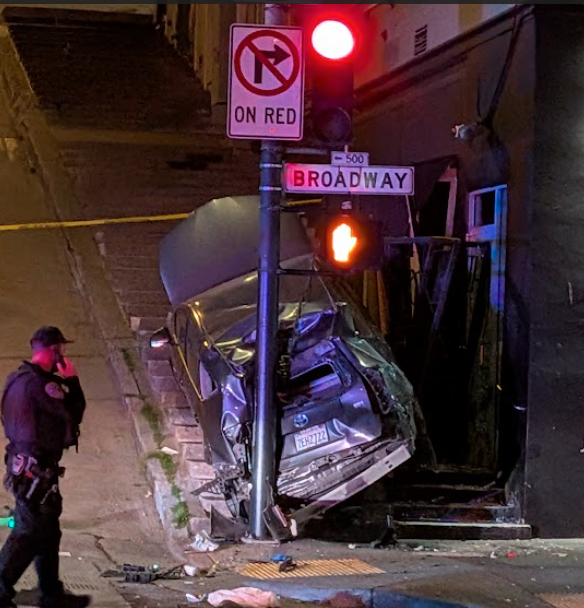
Motorist Careens onto North Beach Sidewalk, Killing Pedestrian
Driver kills pedestrian at another location where a safety project festered
The post Motorist Careens onto North Beach Sidewalk, Killing Pedestrian appeared first on Streetsblog San Francisco.