Wisconsin Dumps One Urban Highway Boondoggle in Favor of Another

One of the nation’s most poorly conceived highway proposals will become slightly less ridiculous. Transportation officials in Wisconsin recently announced they will no longer consider double-decking a portion of Interstate 94 in Milwaukee. The billion-dollar project would have raised the highway to building height in the Story Hill neighborhood.
Wisconsin DOT hasn’t seen the light, however. The state is still marching ahead with a tremendously expensive I-94 expansion project. Instead of spending $1 billion to double-deck the highway, WisDOT has settled on spending $850 million to repair the road and add a lane in each direction.
For comparison, the project will still cost about three times what Governor Scott Walker cut from state support for the University of Wisconsin in his recent budget. The road expansion is designed to save commuters just four minutes in each direction — assuming the state’s traffic assumptions are correct.
But there is very good reason to believe they are not. State officials are using old traffic data to justify the enormous expense. Traffic counts on the corridor actually declined between 2009 and 2012, the latest years for which data was available, according to an analysis by the Wisconsin Public Interest Research Group.
The data Wisconsin DOT cites to justify the project only extends through 2010. The agency says that’s because a later construction project affected traffic levels on the road. But Metro Milwaukee’s population has barely increased in a decade, and statewide, driving has been flat since 1999, so it’s not at all clear why the state would be expecting such an increase.
“Rather than fixing it first and prioritizing the maintenance of our existing roads and bridges, the DOT wants to widen a highway where traffic counts have declined by 8 percent over the past 12 years,” said WISPIRG Director Peter Skopec in a press release.

Read More:
Streetsblog has migrated to a new comment system. New commenters can register directly in the comments section of any article. Returning commenters: your previous comments and display name have been preserved, but you'll need to reclaim your account by clicking "Forgot your password?" on the sign-in form, entering your email, and following the verification link to set a new password — this is required because passwords could not be carried over during the migration. For questions, contact tips@streetsblog.org.
More from Streetsblog USA
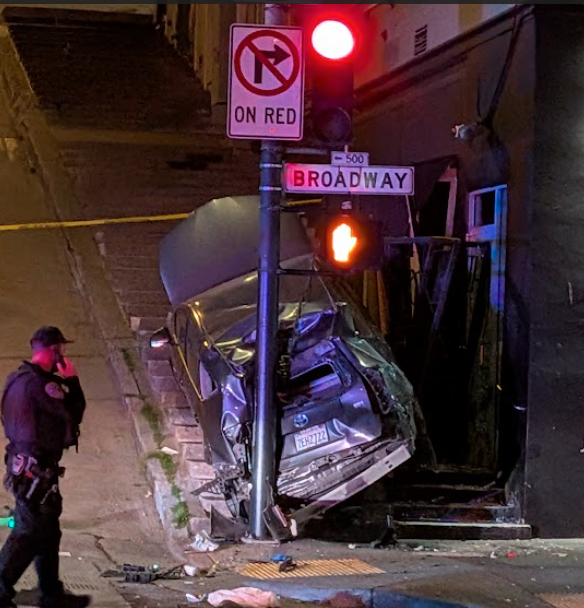
Motorist Careens onto North Beach Sidewalk, Killing Pedestrian
Driver kills pedestrian at another location where a safety project festered
The post Motorist Careens onto North Beach Sidewalk, Killing Pedestrian appeared first on Streetsblog San Francisco.