What People Think of a Citywide 25 MPH Speed Limit in Decatur

Last year, New York City enacted a citywide 25 mph speed limit, a central plank in Mayor Bill de Blasio’s Vision Zero street safety platform. Are other American cities going to follow suit?
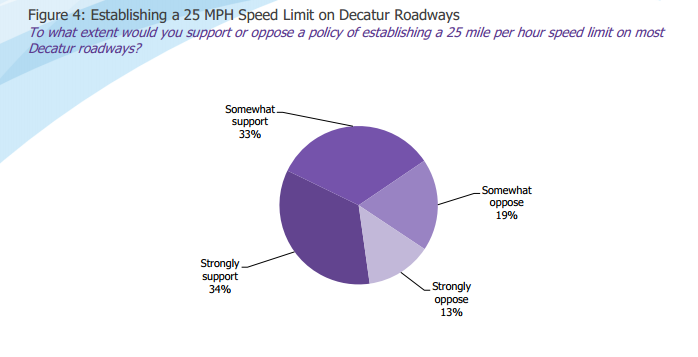
Outside Atlanta, Decatur, Georgia, has been mulling a reduction of its default speed limit for a few years. The results of a 2014 survey indicate that it would be broadly popular, with support from two-thirds of residents, reports Network blog Decatur Metro. Like many American cities, Decatur has some major streets where the state DOT sets the limit, but the effect of a new 25 mph policy would still reach far:
As you can see, over half of Decatur residents either strongly or somewhat support a 25 mph speed limit on Decatur roads. Notice the question says “most” Decatur roads. State route speed limits, like Scott Boulevard, are controlled by the state.
…basically all Decatur residential streets would be affected if Decatur implemented this new across-the-board speed limit of 25 mph. The city held public input sessions on this topic back in 2013. If the city moves forward with this change at some point in the future, the major change would be on 35 mph streets, like Commerce, Clairemont, College, South Candler, West Howard, etc.
Elsewhere on the Streetsblog Network: Streets.mn posts a great map that shows how Minnesota’s road system functions as a gigantic tax transfer from cities to rural areas. Stop and Move wonders if Fresno’s infill development plans can withstand Fresno NIMBYs. And The Urbanist has a photo update on Seattle’s newest protected bike lane.

Read More:
Streetsblog has migrated to a new comment system. New commenters can register directly in the comments section of any article. Returning commenters: your previous comments and display name have been preserved, but you'll need to reclaim your account by clicking "Forgot your password?" on the sign-in form, entering your email, and following the verification link to set a new password — this is required because passwords could not be carried over during the migration. For questions, contact tips@streetsblog.org.
More from Streetsblog USA
Motorist Careens onto North Beach Sidewalk, Killing Pedestrian
Driver kills pedestrian at another location where a safety project festered
The post Motorist Careens onto North Beach Sidewalk, Killing Pedestrian appeared first on Streetsblog San Francisco.