Portland Makes Curbside Parking Easier By Taking Away Free Spots
It’s a lot easier now to find a parking space in Portland.

According to city records, available on-street parking spaces have increased about 10 percent since this summer, which among other benefits will probably bring millions in revenue to the city.
How did they do it? By reforming a permit program for motorists with disabilities, which reduced the number of drivers who may park for free.
The city’s old parking policy allowed those with a disabled placard to park anywhere, all day, at no cost. But there’s a lot of evidence that the system was being taken advantage of by able-bodied parking cheaters. Joe Cortright writing at City Observatory writes:
In an apparent epidemic of frailty, the number of handicapped permits in use in downtown Portland almost doubled between 2007 and 2012. In September 2013, handicapped placard users occupied fully 1,000 of the central city’s 8,000 metered on street spaces.
Last July the city of Portland changed the rules. Rather than allow those with placards to park anywhere, it created 105 designated parking spaces for motorists with disabilities. Permit parking will remain free.
Judging by city data the new policy is working. Cortright writes:
Overnight, the parking landscape in downtown Portland changed. Spaces occupied by placard users dropped 70%. Getting the price right freed up 720 parking spots for other, paying users, expanding the effective supply of parking by nearly 10%.
The change is even more remarkable in the heart of the central business district. I looked at the six most central parking beats in the city — for those familiar with Portland, an area bounded by Burnside Street on the north, the Willamette River on the east, Jefferson and Market Streets on the south, and 10th and 11th Avenues on the west. (These are beats 1,2,3,4,6 and 11.) This area contains a total of about 1,850 on-street metered parking spaces. A year ago, 450 spaces — nearly a quarter of them — were occupied by vehicles with handicapped placards. That’s fallen to 105 placard users — a reduction of 75 percent from the free-parking era. This is the equivalent of adding about 350 parking spaces to the supply of street parking in the heart of downtown Portland.
Not only will it make it easier to park, potentially helping local businesses, the new policy could generate an additional $1.4 million a year in parking revenue, Cortright says. This sounds like a reform other cities dealing with disabled parking placard abuse would be wise to consider.

Read More:
Streetsblog has migrated to a new comment system. New commenters can register directly in the comments section of any article. Returning commenters: your previous comments and display name have been preserved, but you'll need to reclaim your account by clicking "Forgot your password?" on the sign-in form, entering your email, and following the verification link to set a new password — this is required because passwords could not be carried over during the migration. For questions, contact tips@streetsblog.org.
More from Streetsblog USA
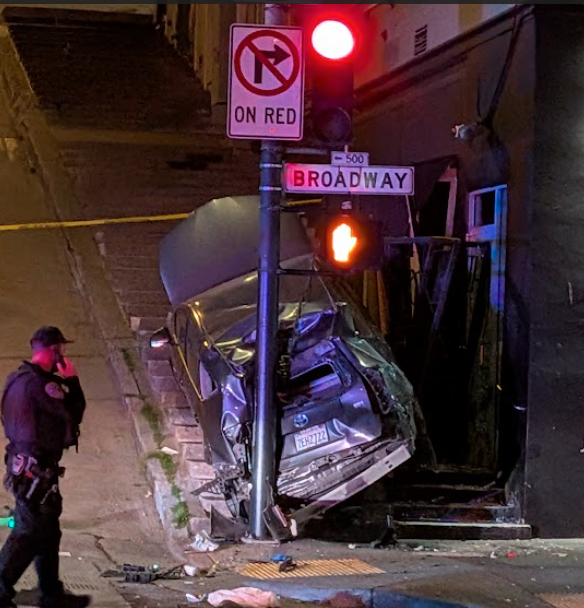
Motorist Careens onto North Beach Sidewalk, Killing Pedestrian
Driver kills pedestrian at another location where a safety project festered
The post Motorist Careens onto North Beach Sidewalk, Killing Pedestrian appeared first on Streetsblog San Francisco.