Study: Safe Routes to School Programs Boost Walking and Biking 30%
In just two generations, the share of American kids who walk or bike to school has plummeted — dropping from 50 percent in 1969 to 13 percent today. Can the trend be reversed? Yes, according to new research that shows the impact of street safety infrastructure and other programs implemented with federal Safe Routes to School (SRTS) funds.

A study published in this quarter’s Journal of the American Planning Association found that over time, SRTS programs produce significant increases in the share of children who walk or bike to school — an effect that grows more pronounced over time. The average increase in walking and biking rates attributable to SRTS programs over a five-year period was 31 percent, the researchers concluded.
The authors examined 801 schools in Florida, Oregon, Texas, and the District of Columbia, using data collected by the National Center for Safe Routes to School from 2007 to 2012 — yielding data from 378 schools with SRTS programs and 423 without. They say the study is the first SRTS research based on such a large geographic sample of schools, enabling them to isolate the effect of different types of Safe Routes to School strategies.
The effect of “education and encouragement” programs grew over time, with SRTS schools seeing progressively larger differences in each successive year. Over five years, the researchers found, this tactic led to a 25 percent increase in walking and biking to school, controlling for demographic differences, neighborhood characteristics, and other factors. Meanwhile, infrastructure investments like safer sidewalks or bike lanes led to a one-time 18 percent increase.
While Safe Routes to School programs work, they’re also in jeopardy. Federal funding for SRTS was cut in the last transportation bill, and that fight is expected to resume once Congress takes up the next one.

Streetsblog has migrated to a new comment system. New commenters can register directly in the comments section of any article. Returning commenters: your previous comments and display name have been preserved, but you'll need to reclaim your account by clicking "Forgot your password?" on the sign-in form, entering your email, and following the verification link to set a new password — this is required because passwords could not be carried over during the migration. For questions, contact tips@streetsblog.org.
More from Streetsblog USA
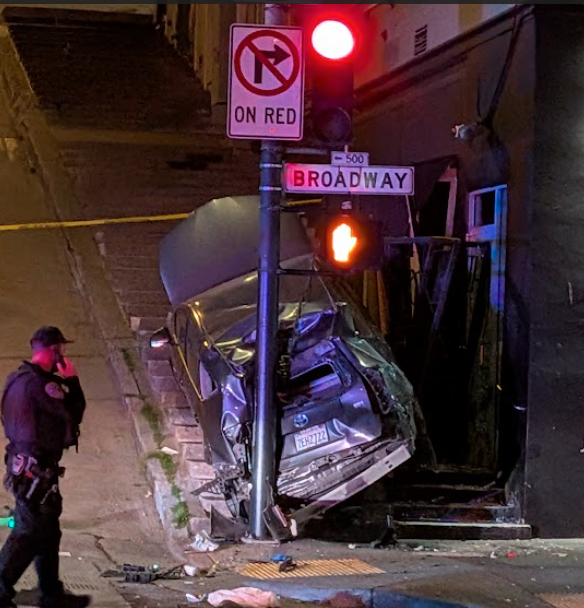
Motorist Careens onto North Beach Sidewalk, Killing Pedestrian
Driver kills pedestrian at another location where a safety project festered
The post Motorist Careens onto North Beach Sidewalk, Killing Pedestrian appeared first on Streetsblog San Francisco.