NYC Bike-on-Sidewalk Tickets Most Common in Black and Latino Communities

Michael Andersen blogs for The Green Lane Project, a PeopleForBikes program that helps U.S. cities build better bike lanes to create low-stress streets.
Of all the possible ways to break the law on a bicycle, pedaling on the sidewalk ought to be one of the most sympathetic.
Yes, sidewalk biking is unpleasant and potentially dangerous to everyone involved. But people wouldn’t bike on sidewalks if they weren’t in search of something they want: physical protection from auto traffic.
A person biking on a sidewalk is just trying to use the protected bike lane that isn’t there. That’s why sidewalk biking falls dramatically the moment a protected lane is installed. When a bike rider fails to follow this law, it’s not good. But it’s usually because the street has already failed to help the rider.
All of which makes it especially disturbing that bans on sidewalk biking seem to be enforced disproportionately on black and Latino riders.
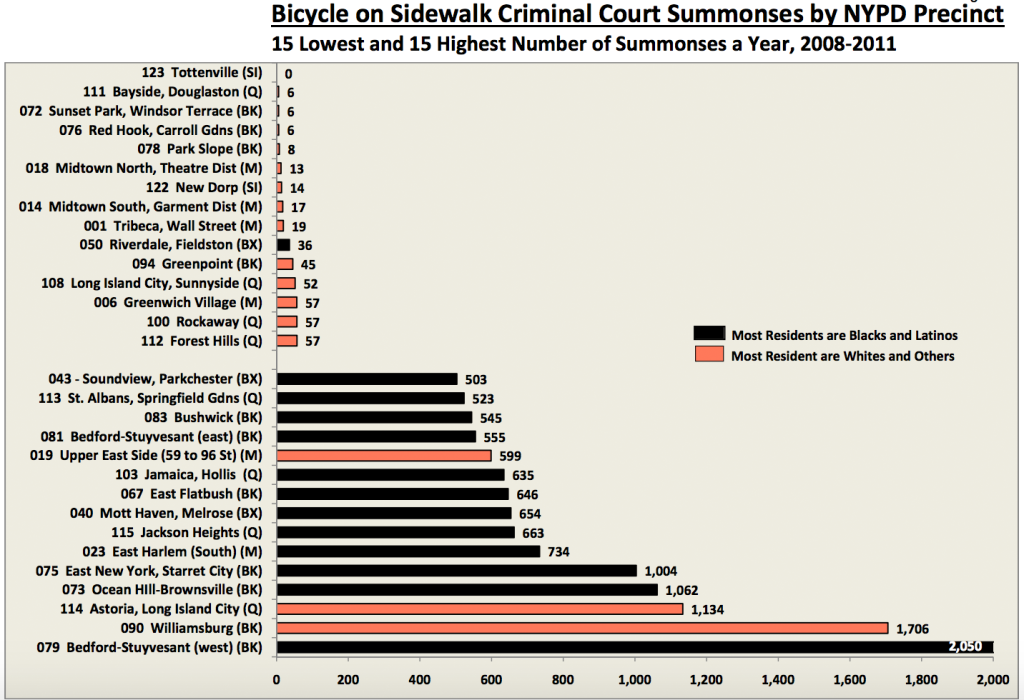
That’s the implication of a recent study from New York City. City University of New York sociologist Harry Levine and civil rights attorney Loren Siegel coded the neighborhoods with the most and fewest bike-on-sidewalk court summonses by whether or not most residents are black or Latino.
Of the 15 neighborhoods with the most such summonses, he found, 12 were mostly black or Latino. Of the 15 neighborhoods with the fewest summonses, 14 did not have a black or Latino majority.
One of the reasons for this gap may be that streets in these neighborhoods are more likely to be built like highways. Another: biking might be more common overall in these places. And local cultures might have different attitudes toward biking. But certainly, some of the reason is that police officers and court officials tend to treat people of different races differently.
Whatever the cause, this is what institutional racism looks like. Here’s how one observer described the scene in summons court for the New York Times in 2012:
Summons court — which handles offenses like public drinking, riding bicycles on the sidewalk or talking back to the cops, otherwise known as disorderly conduct — is anything but petty. It is a place where low-level offenses can lead to permanent criminal histories and lifelong encumbrances.
Reducing sidewalk biking by building the streets people actually want, with physical separation between bikes, cars, and sidewalks, obviously won’t fix institutional racism. But it’s maddening when missing infrastructure contributes to the machinery of inequality. That’s what’s happening here, and it’s just another price American cities pay when they relegate biking to the margins of our society and the gutters of our streets.
You can follow The Green Lane Project on Twitter or Facebook or sign up for its weekly news digest about protected bike lanes.

Streetsblog has migrated to a new comment system. New commenters can register directly in the comments section of any article. Returning commenters: your previous comments and display name have been preserved, but you'll need to reclaim your account by clicking "Forgot your password?" on the sign-in form, entering your email, and following the verification link to set a new password — this is required because passwords could not be carried over during the migration. For questions, contact tips@streetsblog.org.
More from Streetsblog USA
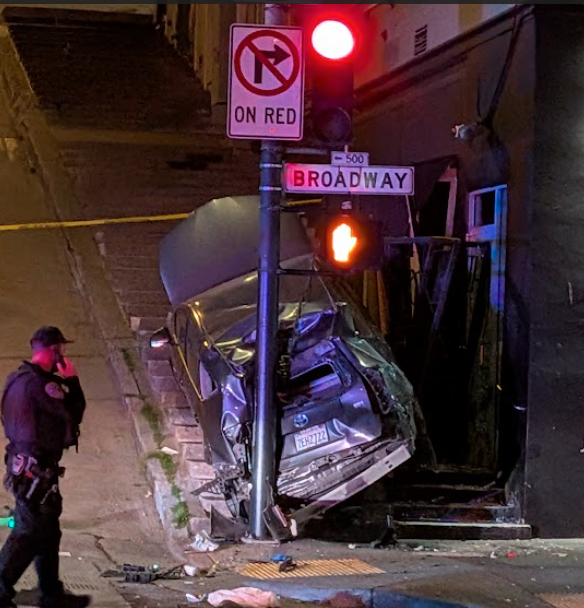
Motorist Careens onto North Beach Sidewalk, Killing Pedestrian
Driver kills pedestrian at another location where a safety project festered
The post Motorist Careens onto North Beach Sidewalk, Killing Pedestrian appeared first on Streetsblog San Francisco.