How Can Suburban Communities Repair Disconnected Streets?

Winding, suburban-style streets that end in cul-de-sacs make it harder for people to walk in their communities and funnel traffic to a few major thoroughfares, leading to dangerous street designs and mounting congestion. But the people who live on dead-end streets tend to like the fact that they don’t have to deal with much traffic.
Mary Newsom shares how this dilemma is playing out in some Charlotte-area communities at her blog, the Naked City:
One of the most politically fraught decisions any elected or government staff officials can make is to connect streets that used to be dead-ends. It’s easy to understand why residents protest, as the Floral Lane residents are doing.
The first house I bought was on a dead-end block in Charlotte’s Chantilly neighborhood, where my street ended at Briar Creek. I liked the lack of traffic on the street, with only residents and their guests traveling in front of the house. I felt my cats were safe to go outside there. People who live on cul-de-sacs have the same welcome lack of cars going past.
But when a whole city is overloaded with dead-ends and cul-de-sacs, that sends huge numbers of cars onto the few streets that do connect. The result: far more congestion than you’d otherwise have.
Consider Providence Road in south Charlotte. It’s horrifically congested, especially the farther you get from uptown. One reason is that all the vehicles heading from south Charlotte towards uptown have to travel on comparatively few thoroughfares, because south of Myers Park and Eastover, the neighborhood streets don’t connect to any other neighborhoods. If the same number of vehicles that clog Providence Road daily were spread through dozens of interconnected streets, rather than all jamming Providence Road, the congestion problem would ease considerably.
But how does a town or city progress from Dead-End-Ville to Connectivity City? That’s the hard part. If you simply open one new street connection, that street will absorb far more than its share of the traffic. What to do?
In order to overcome this problem, Newsom says cities should reconnect dozens of streets at a time, and when they do so, they should add traffic calming measures to help alleviate nearby residents’ concerns about cars.
Elsewhere on the Network today: Reno Rambler weighs in on a bicycle boulevard long in the works, calling it a “B.B.I.N.O. — Bicycle Boulevard in Name Only.” World Streets says the importance of car sharing in cities goes well beyond its share of total traffic. And People for Bikes reports that bicycling is one of the few activities that seems to be widely enjoyed across all income levels in the U.S.

Read More:
Streetsblog has migrated to a new comment system. New commenters can register directly in the comments section of any article. Returning commenters: your previous comments and display name have been preserved, but you'll need to reclaim your account by clicking "Forgot your password?" on the sign-in form, entering your email, and following the verification link to set a new password — this is required because passwords could not be carried over during the migration. For questions, contact tips@streetsblog.org.
More from Streetsblog USA
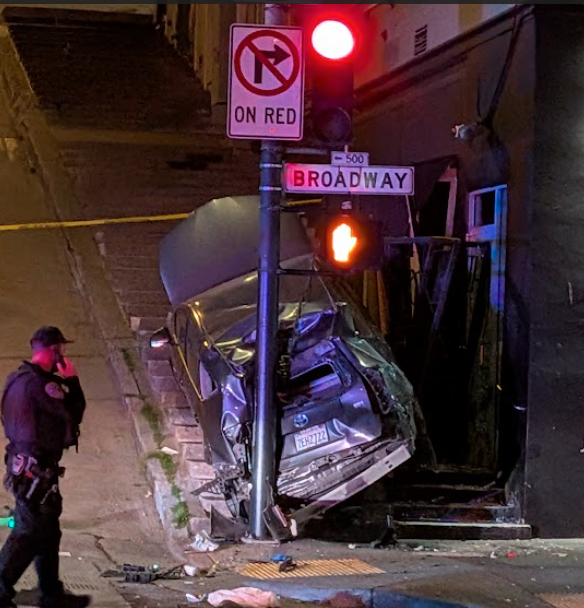
Motorist Careens onto North Beach Sidewalk, Killing Pedestrian
Driver kills pedestrian at another location where a safety project festered
The post Motorist Careens onto North Beach Sidewalk, Killing Pedestrian appeared first on Streetsblog San Francisco.