Denver’s Big Opportunity for World-Class Streets

Just a few months ago, Denver opened its first protected bike lane on 15th Street. But was that a one-off project or will the Mile High City change the way it designs streets citywide?
The city’s approach to the redesign of Broadway will give a pretty strong indication of how serious Denver leaders are about making safer, multi-modal streets. David Mintzer at Network blog Bike5280 reports that there are some transformative designs (including the one above) kicking around:
Given the high speed of traffic, few cyclists feel safe riding down this corridor and it is unlikely that a 5 foot wide striped bike lane would provide much comfort. Currently Broadway is an expanse of concrete with 5 lanes of speeding traffic. But there is the potential to be so much more.
The newly released Golden Triangle Neighborhood Plan has published an ambitious design for transforming Broadway into a grand multimodal boulevard. Here we see [pictured above] a protected two-way bike lane conveniently placed alongside a B-Cycle bike share station and a separated bus lane on the right.
According to a CU Denver study, the Broadway/Lincoln corridor accounts for 6 of the 12 most dangerous intersections in Denver for cyclists with 37 bicycle/automobile collisions between 2003 and 2009.
Mintzer compares Broadway’s width to First Avenue in New York City, where the DOT converted motor vehicle lanes to a bus lane and a protected bike lane in 2010. Afterward, transit speeds improved 15 percent, injuries to all street users declined, cycling increased 153 percent, and general traffic speeds didn’t change.
Elsewhere on the Network today: Rebuilding Place in the Urban Space says transit stations should be designed as inviting entry points to a neighborhood. BikeOKC reports that Oklahoma City has a new plan for 62 miles of bike routes, but the city’s proposal is not as exciting as it sounds. And Bike Portland explains a new study finding that people who live in the city’s “accessory units” in backyards and basements tend to have low car ownership rates.

Read More:
Streetsblog has migrated to a new comment system. New commenters can register directly in the comments section of any article. Returning commenters: your previous comments and display name have been preserved, but you'll need to reclaim your account by clicking "Forgot your password?" on the sign-in form, entering your email, and following the verification link to set a new password — this is required because passwords could not be carried over during the migration. For questions, contact tips@streetsblog.org.
More from Streetsblog USA
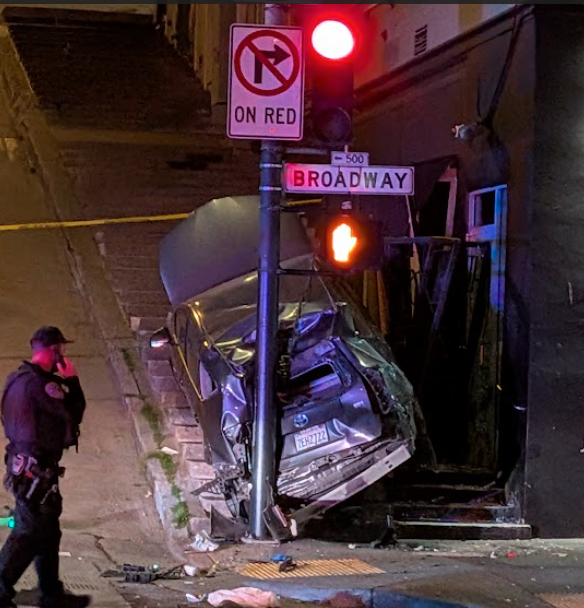
Motorist Careens onto North Beach Sidewalk, Killing Pedestrian
Driver kills pedestrian at another location where a safety project festered
The post Motorist Careens onto North Beach Sidewalk, Killing Pedestrian appeared first on Streetsblog San Francisco.