Earth Day Resolution: Stop Building Projects Like the Zoo Interchange

Leading up to Earth Day, the New York Times ran an editorial, “Time Is Running Out,” lamenting the lack of urgency in the United States to prevent a very urgent problem: catastrophic climate change. Today, Brad Plumer at Vox explained why it may be too late to keep average temperatures from rising more than 2 degrees Celsius above preindustrial levels — the threshold that climate scientists have been warning about.
There are many steps we’ll have to take to drastically reduce greenhouse gas emissions. But one of them is most definitely this: America has to stop spending billions on projects like Wisconsin’s Zoo Interchange and start getting serious about building places where people can get around by walking, biking, and taking transit.
The Zoo Interchange embodies America’s broken transportation spending system, which former US DOT official Beth Osborne described on Atlantic Cities today as “an entitlement for state departments of transportation to allocate for their own priorities.”
This single highway interchange, aimed at reducing delays for suburban car commuters in the nation’s 30th largest city, costs more than total federal spending on walking and biking annually.
The Zoo Interchange carries 300,000 cars per day. It is “Wisconsin’s oldest and busiest interchange,” according to the state. A big part of Wisconsin DOT’s justification for the Milwaukee interchange is “safety.” According to WisDOT, there were an average of 2.5 collisions a day on the interchange between 2000 and 2005, and nine were fatal.
By comparison, according to the 2009 National Household Travel Survey, Americans make about 112 million walking trips daily. About 4,000 pedestrians are killed annually on American roads.
And yet, Wisconsin will spend more on this one sprawl-inducing highway project than the feds spend each year on all walking and biking projects combined.
Clearly, our priorities are out of whack — way out of whack.
Total federal spending for biking and walking amounts to about $2.61 per capita. If the pricetag of the Zoo Interchange were divided by every man, woman, and child in the United States, the cost would be $5.39. It’s important to note that state and local funds will pay for most of this project. Still, our sources tell us that Zoo Interchange planners hope to get 20 percent of the cost from the federal government, or $344 million.
Meanwhile, advocates fought tirelessly to protect $822 million in funding for biking and walking in the last federal transportation bill.
And here’s the sad fact. The Zoo Interchange isn’t all that special. It’s a very expensive interchange, but it belongs to the same club as Louisville’s $2.6 billion Ohio River Bridges project or Cleveland’s $300 million Opportunity Corridor. Almost every region of the country has a road project that appears just as dubious.
We won’t succeed in the fight against climate change if we keep throwing billions of dollars down the sinkhole of car dependence and sprawl.

Streetsblog has migrated to a new comment system. New commenters can register directly in the comments section of any article. Returning commenters: your previous comments and display name have been preserved, but you'll need to reclaim your account by clicking "Forgot your password?" on the sign-in form, entering your email, and following the verification link to set a new password — this is required because passwords could not be carried over during the migration. For questions, contact tips@streetsblog.org.
More from Streetsblog USA
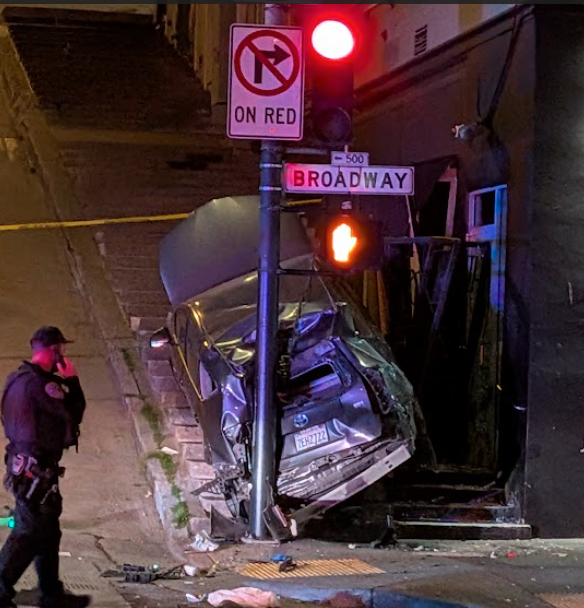
Motorist Careens onto North Beach Sidewalk, Killing Pedestrian
Driver kills pedestrian at another location where a safety project festered
The post Motorist Careens onto North Beach Sidewalk, Killing Pedestrian appeared first on Streetsblog San Francisco.