Enrique Peñalosa: Democracy Is Bus-Only Lanes and Protected Bikeways

I lived in Bogotá, Colombia, for about half of 2002. While I was there, a political party headquarters near my house was car-bombed, guerrillas attacked the presidential inauguration, and thousands of people were killed in routine violence. It was a stressful place to live.
Adding to that stress was the speed and chaos of traffic. Every taxi ride I survived was a minor miracle.
And then there was Sunday.
Sundays and holidays, 75 miles of major roads — normally choked with diesel-powered kamikaze vehicles weaving in and out of lanes in a cacophony of car horns — were closed to motor vehicle traffic for the ciclovía. Filling the void were families walking dogs, teenagers on skateboards, couples on bikes, and one freaked-out gringa who finally found a place in Bogotá she could breathe. Those car-free rides saved me.
Mayor Enrique Peñalosa didn’t start the ciclovía but he expanded it and made it a vibrant, exciting activity enjoyed by two million people every week. He flatly rejected the argument that it wasn’t worth building bicycle infrastructure for the tiny fraction of Bogotanos who rode, knowing that “if you build it, they will ride.”
In a TED talk posted yesterday (but filmed in September), Peñalosa pushes the boundaries of what most people think is possible in a city. Reserve every other street for transit, bikes, and pedestrians? Dedicate bus-only lanes in dense, congested cities? It’s not only possible, Peñalosa says, it’s also necessary for a healthy democracy. If you’ve never seen this man speak, do yourself a favor and spend 14 minutes with him in this TED talk.
In the talk, Peñalosa asserts that “an advanced city is not one where even the poor use cars, but one where even the rich use public transport.”
He compares the over-allocation of street space to private motor vehicles to the prohibition on women voting — a blatant injustice that seems normal when you’re used to it. Today, most people don’t think twice when they see a bus stuck in traffic. But that injustice will also one day seem like a relic of a misguided past.
Carving out adequate space for people on foot was even harder than dedicating street space for buses, Peñalosa said — his hair went gray and he was almost impeached during that fight. But it was worth it. “What really makes the difference between advanced and backwards cities is not highways or subways, but quality sidewalks,” he says. “In no constitution is parking a constitutional right.”
And while American bike infrastructure is often portrayed as an amenity for the elite, Peñalosa views protected bikeways — like the 220 or so miles he built — as a mark of true equality. “They show the citizen on a $30 bicycle is equally important to the one in a $30,000 car,” he said.
The rapid pace of urbanization makes it all the more important to get the allocation of street space right. More than half of the city fabric that will exist in the year 2060 has yet to be built. And the growth won’t just happen in developing countries — 70 million new homes will be built in the United States in the next 50 years.
Peñalosa suggests three strategies to make future cities better than the ones we have now:
- Build extensive greenways. Every other street should be only for pedestrians and bicycles.
- Reserve some streets for buses only (bike and pedestrians would be welcome too).
- Stop the sprawl caused by rapid urbanization and poverty.
The “misery belts” around cities in the developing world are filled with illegal developments of poor people who have moved from the countryside and can’t afford to live in the part of the city with infrastructure and services. So this is perhaps Peñalosa’s most radical proposal: In countries that have yet to urbanize, governments should acquire all land around cities, then cities could grow in the right way. It may sound far-fetched, but according to Peñalosa, these cities will determine the quality of life and even happiness for billions of people — if they’re built well.

Read More:
Streetsblog has migrated to a new comment system. New commenters can register directly in the comments section of any article. Returning commenters: your previous comments and display name have been preserved, but you'll need to reclaim your account by clicking "Forgot your password?" on the sign-in form, entering your email, and following the verification link to set a new password — this is required because passwords could not be carried over during the migration. For questions, contact tips@streetsblog.org.
More from Streetsblog USA
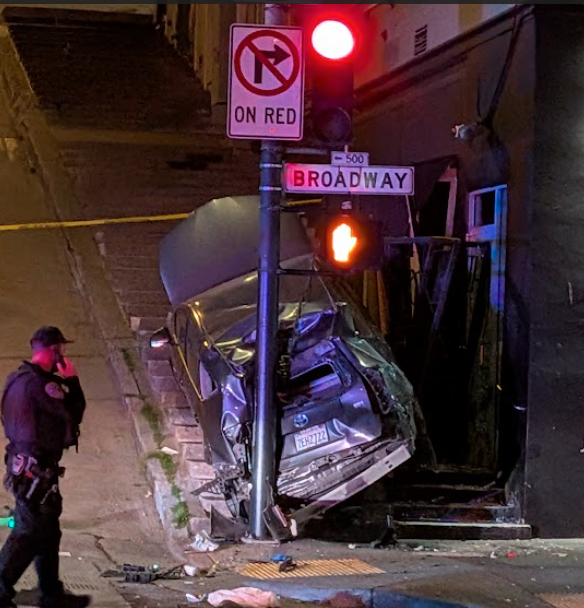
Motorist Careens onto North Beach Sidewalk, Killing Pedestrian
Driver kills pedestrian at another location where a safety project festered
The post Motorist Careens onto North Beach Sidewalk, Killing Pedestrian appeared first on Streetsblog San Francisco.