Jeff Speck: America Has So Many Problems. Walkability Solves Most of Them.

In the ineffable way of all TED talkers, urban planner Jeff Speck, author of “The Walkable City,” has made a concise, urgent, and oddly charming argument for walkability. In just under 17 minutes, Speck has articulated the economic, epidemiological, and environmental arguments to end automobile dependency and start using our feet again. It’s worth a watch (and a re-tweet). A few highlights:
- The worst idea America has ever had is suburban sprawl, and it’s being emulated — like many American values, both good and bad — around the world.
- We’ve doubled the number of roads in America since the 1970s — and the proportion of our household income we spend on transportation.
- Portland went against the grain of suburban sprawl and highway expansion and has been a magnet for college-educated young people who want to live in a city that prizes biking and walking. Portland’s VMT peaked in 1996, with each person driving 11 minutes less per day now.
- One out of three Americans is obese, a second third is overweight. “We have the first generation of children in America that are predicted to live shorter lives than their parents,” Speck said. “I believe that this American health care crisis that we’ve all heard about is an urban design crisis and that the design of our cities lies at the cure.” Studies show that obesity correlates more strongly to inactivity than to diet.
- Urban VMT is a good predictor of asthma problems in your city.
- We take car crashes for granted as a necessary evil. But walkable cities have far lower crash fatality rates. It’s not whether you’re in the city or not, it’s whether your city was designed around cars or people.
- “The environmental movement in America has historically been an anti-city movement,” Speck said. “‘Move into the country, commune with nature, build suburbs.'” Carbon maps of CO2 emissions per square mile makes cities look like polluting cesspools, but if you look at a map of emissions per household, the heat map flips.
- Sustainable home accessories and gadgets, which Speck admits he has a weakness for, aren’t nearly as important as living near transit in a walkable neighborhood. “Changing all your lightbulbs to energy savers saves as much energy in a year as moving to a walkable neighborhood does in a week.”
- The lifestyle choice — walkability — that no one wants to tell Americans to make is actually one that will make them happier. Walkability correlates to higher quality of life.

Read More:
Streetsblog has migrated to a new comment system. New commenters can register directly in the comments section of any article. Returning commenters: your previous comments and display name have been preserved, but you'll need to reclaim your account by clicking "Forgot your password?" on the sign-in form, entering your email, and following the verification link to set a new password — this is required because passwords could not be carried over during the migration. For questions, contact tips@streetsblog.org.
More from Streetsblog USA
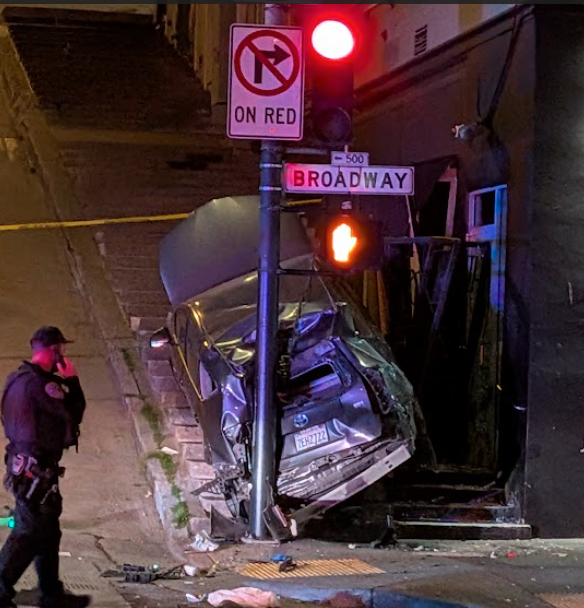
Motorist Careens onto North Beach Sidewalk, Killing Pedestrian
Driver kills pedestrian at another location where a safety project festered
The post Motorist Careens onto North Beach Sidewalk, Killing Pedestrian appeared first on Streetsblog San Francisco.