The Problem With Treating Pedestrians Like Drivers
After U.S. DOT released a report earlier this month on pedestrian safety, media outlets around the country raced to produce indictments of “drunk walking.”

“Drunk Walking Leads to Pedestrian Fatalities,” exclaimed Tulsa’s News on 6, as if people on foot have the same responsibility to be sober as people operating fast, heavy machinery. “Among pedestrians aged 25- to 34-years-old who were killed, half were alcohol-impaired,” wrote the Cleveland Plain Dealer‘s Alison Grant, applying the same .08 percent blood-alcohol standard that’s used to measure driving impairment. These articles stop just short of saying a legal prohibition on “drunk walking” is the next logical step.
Applying the same behavioral standards to walking that we attach to driving is a creeping trend. The New York Times has ruminated on the “dangers of distracted walking.” In California a new Senate resolution encourages education in “defensive walking and biking” as a response to pedestrian fatalities among children.
It may be tempting to use driving terms to frame discussions about pedestrian safety because driving is, in many places, the default mode of transportation in the U.S. But there’s a problem with simply assigning the responsibilities that come with driving — like being sober, not texting — to walking. Walking is a right, not a revocable privilege like driving.
Kids walk. Blind people walk. People with poor judgment walk. That’s not going to change, and we shouldn’t pretend it can or will. Texting while walking, or trying to cross the street with .09 percent blood alcohol content should not put people at risk of an early death.
Pedestrian deaths are a systemic problem, and the problem isn’t that people are texting, or drunk, or not being defensive enough. Pedestrians aren’t, in themselves, doing anything dangerous, at least until you add cars to the equation.
The core problem is that it isn’t safe for people to walk. In too many places, this is because we’ve designed intersections like high-stakes obstacle courses for people on foot. We allow people to drive at potentially fatal speeds in pedestrian-rich areas. And now we’re talking about pedestrian deaths in a way that equates walking with driving.
It’s a powerful testament to the structural inequality faced people on foot in this country that a report about 4,000 pedestrian deaths each year could be framed as an indictment of “drunk walking.”

Read More:
Streetsblog has migrated to a new comment system. New commenters can register directly in the comments section of any article. Returning commenters: your previous comments and display name have been preserved, but you'll need to reclaim your account by clicking "Forgot your password?" on the sign-in form, entering your email, and following the verification link to set a new password — this is required because passwords could not be carried over during the migration. For questions, contact tips@streetsblog.org.
More from Streetsblog USA
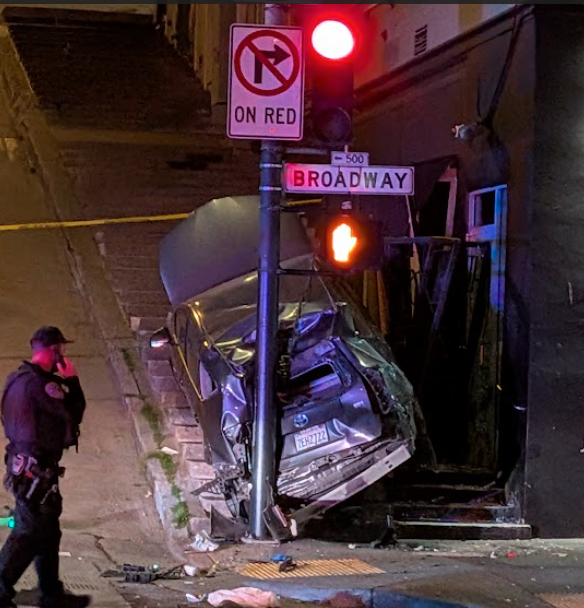
Motorist Careens onto North Beach Sidewalk, Killing Pedestrian
Driver kills pedestrian at another location where a safety project festered
The post Motorist Careens onto North Beach Sidewalk, Killing Pedestrian appeared first on Streetsblog San Francisco.