Expanded, Simplified TIFIA Still Greasing the Gears of Highway Expansion

A federal loan awarded to a California highway illustrates how TIFIA, the “innovative” transportation financing program that was expanded as part of MAP-21, is still funding business-as-usual highway projects.
U.S. DOT announced last week that it would back California’s SR 91 highway expansion in suburban Los Angeles with $421 million in low-interest loans. The project is a $1.3 billion traditional freeway widening with no special environmental or social merits. It will extend two express lanes and add two additional lanes on an eight-mile stretch between the Inland Empire and Orange County, and relieve the “local commuter nightmare,” according to Congressman Ken Calvert (R-CA). The project was also the recipient of $20 million in TIGER grants.
Since the program launched in 1998, TIFIA has funded 32 projects to the tune of $10.5 billion. When it was dramatically expanded as part of MAP-21, guidelines for the federal loan program were changed so that essentially the only criterion for project acceptance is creditworthiness. Since then, observers have been wondering whether the “innovative” program would simply greenlight a backlog of highway projects. (Even when the program had more criteria attached to its loans, the Government Accountability Office found that it tilted toward “large highway projects.”)
While most TIFIA projects are about moving cars, not all of them are. Since MAP-21 was enacted, TIFIA has funded $219 million in transit and pedestrian projects — including the Orange Line Expansion in Dallas and the Chicago Riverwalk — and just more than $1 billion in highway projects, including SR 91. That’s about five dollars in highway spending for every dollar spent on sustainable transportation. This is basically the same split that existed before MAP-21. The GAO found that in 2010 and 2011, 16.6 percent of TIFIA funds were spent on transit.
Awarding this TIFIA loan was one of the first moves by new U.S. Transportation Secretary Anthony Foxx. In a press release last week, Foxx oddly called the road an example of “fix-it-first” policy, although it is quite clearly a road-widening project. “This project is a job creator that will improve mobility in the region and better connect Orange and Riverside counties,” Foxx said.
Will TIFIA continue to fund more of these “innovative” projects to build new highway lanes? It seems likely.

Read More:
Streetsblog has migrated to a new comment system. New commenters can register directly in the comments section of any article. Returning commenters: your previous comments and display name have been preserved, but you'll need to reclaim your account by clicking "Forgot your password?" on the sign-in form, entering your email, and following the verification link to set a new password — this is required because passwords could not be carried over during the migration. For questions, contact tips@streetsblog.org.
More from Streetsblog USA
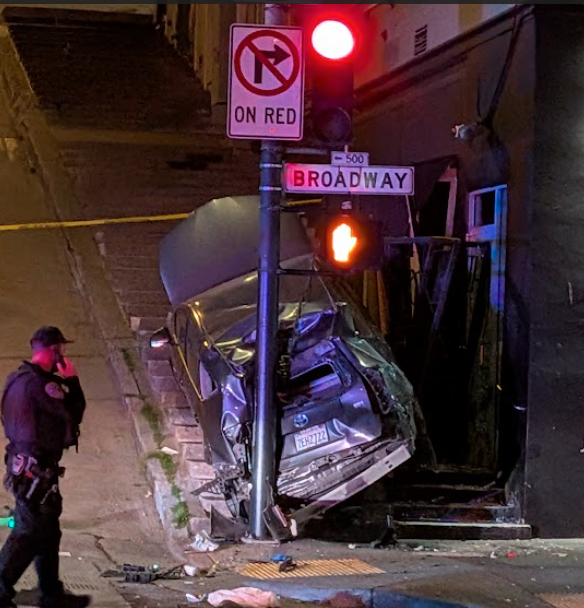
Motorist Careens onto North Beach Sidewalk, Killing Pedestrian
Driver kills pedestrian at another location where a safety project festered
The post Motorist Careens onto North Beach Sidewalk, Killing Pedestrian appeared first on Streetsblog San Francisco.