Buffalo Dug Itself Into a Deep Infrastructure Hole. Can It Escape?
It truly is a testament to the collective power of denial that Rust Belt city leaders still think highways are going to improve their economies. Decades of experience with sprawl and center city decline apparently haven’t put an end to the notion that prosperity is just one road widening away. In Cleveland, business leaders are clamoring for a new $350 million roadway they insist will revive manufacturing in some very poor, nearly-abandoned neighborhoods. Meanwhile, a bit further east on the Lake Erie coast, there’s a great example of how cities’ seemingly bottomless optimism about road and highway projects can end up putting them in a very bad position.

Since 1990, the Buffalo metro area has lost 5 percent of its population and built 525 miles of new roads. According to One Region Forward, a collaborative regional visioning project that major planning agencies are currently undertaking, that translates into roughly 1,043 new “lane miles,” at an average annual maintenance cost, per lane mile, of $25,328 in Erie County and $16,166 in Niagara County.
Looking at the Buffalo region alone, this means taxpayers have assumed $26 million more in maintenance costs each year, divided among fewer people. That works out to about $35 per person, per year, Buffalo Rising reports. But those costs are really just the tip of the iceberg:
The real cost associated with this new infrastructure is actually much greater. When we build new roads, we often need to expand our sewer, water, utility lines, etc.
In Buffalo Niagara, where we have been slowly losing population for forty years, this new infrastructure has been created with fewer people to contribute tax dollars to pay for it.
For instance, the New York State Department of Transportation in 2011 estimated that an additional $4.03 billion would be needed to bring the state system up to a state of good repair.
It’s a good thing the Buffalo region is finally beginning to critically examine its road spending with One Region Forward. Buffalo Rising mentions a handful of policy tools Buffalo could employ to get a handle on ballooning infrastructure costs — like creating new incentives for infill development and rural land preservation — though it remains to be seen whether the city will actually seize on any of them.

Read More:
Streetsblog has migrated to a new comment system. New commenters can register directly in the comments section of any article. Returning commenters: your previous comments and display name have been preserved, but you'll need to reclaim your account by clicking "Forgot your password?" on the sign-in form, entering your email, and following the verification link to set a new password — this is required because passwords could not be carried over during the migration. For questions, contact tips@streetsblog.org.
More from Streetsblog USA
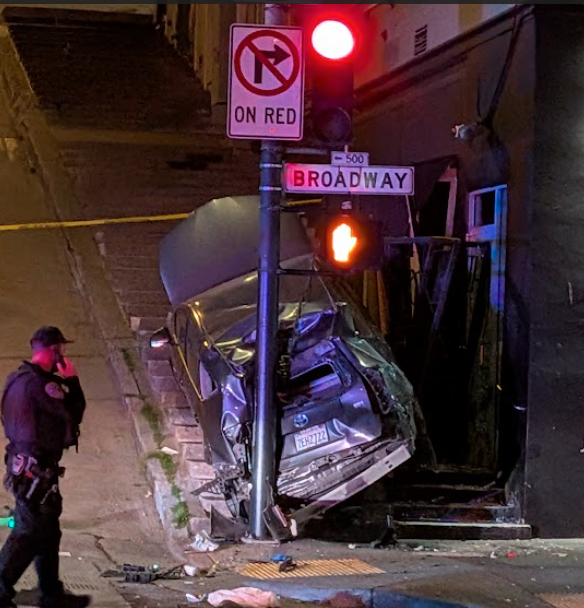
Motorist Careens onto North Beach Sidewalk, Killing Pedestrian
Driver kills pedestrian at another location where a safety project festered
The post Motorist Careens onto North Beach Sidewalk, Killing Pedestrian appeared first on Streetsblog San Francisco.