I-5 Bridge Collapse: A Painful Reminder of the Nation’s Misguided Priorities


In a searing reminder that the nation has to do a better job of keeping its infrastructure in safe working condition, the I-5 bridge between Burlington and Mt. Vernon, Washington, collapsed last night. Thankfully, no one was killed, and the three people whose vehicles fell into the water were hospitalized with only minor injuries.
Interstate-5 runs from the Mexican border to the Canadian border, connecting most of the major cities of Washington, Oregon, and California. The collapse of a bridge on one of the country’s most important roads reveals the fragile state of the nation’s critical infrastructure, especially coming six years after the I-35W bridge collapse in Minneapolis, which killed 13 people.
A truck with an oversize load apparently hit the overhead part of the steel truss bridge at about 7:00 p.m. last night, buckling the bridge and dropping two vehicles about 25 feet down into the cold Skagit River.

The bridge was built in 1955 and has a sufficiency rating of 57.4 out of 100, according to federal records — well below the statewide average rating of 80. Still, Transportation Secretary Lynn Peterson said the bridge was inspected twice last year, in August and November, and repairs were made. It wasdeemed “functionally obsolete” — but not structurally deficient — as recently as 2010.
Functional obsolescence means that the bridge was built to outdated standards but doesn’t indicate that it’s necessarily unsafe. Often, a bridge is deemed obsolete simply for being more narrow than engineers would currently like it to be, given the level of traffic throughput. However, one factor in deeming a bridge “functionally obsolete” can be that it wasn’t built to withstand current vehicle weight loads — or heights.
ASCE’s 2013 infrastructure report card says 1,693 — 21.6 percent — of Washington’s bridges are functionally obsolete. Sixty-seven percent of the state’s roads are in poor or mediocre condition.
Though I-5 is an interstate highway, the collapse occurred in a state that has de-prioritized repair on its state roads. Washington spends just 14 percent of its total state highway budget on repair. Only six states spend less. According to a 2011 Smart Growth America analysis [PDF], the state spends $181 million a year on repair, when it needs to spend $426 million.
The collapse puts out of commission a bridge used by an average of 71,000 vehicles a day at the start of a busy holiday travel weekend.

Read More:
Streetsblog has migrated to a new comment system. New commenters can register directly in the comments section of any article. Returning commenters: your previous comments and display name have been preserved, but you'll need to reclaim your account by clicking "Forgot your password?" on the sign-in form, entering your email, and following the verification link to set a new password — this is required because passwords could not be carried over during the migration. For questions, contact tips@streetsblog.org.
More from Streetsblog USA
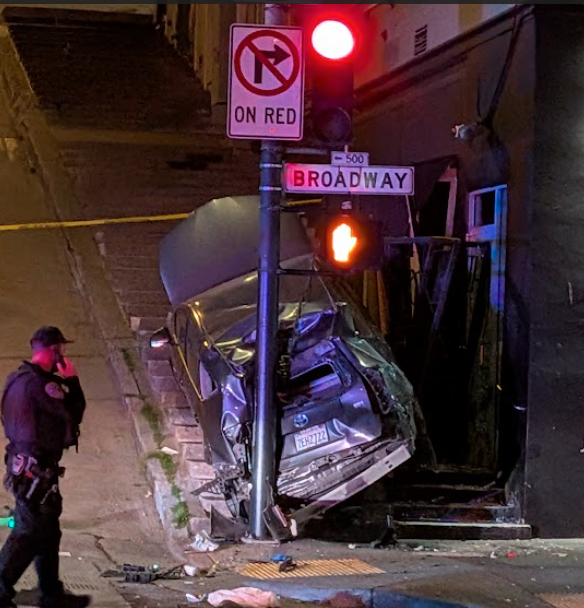
Motorist Careens onto North Beach Sidewalk, Killing Pedestrian
Driver kills pedestrian at another location where a safety project festered
The post Motorist Careens onto North Beach Sidewalk, Killing Pedestrian appeared first on Streetsblog San Francisco.