Surviving a War Abroad Only to Die Back Home Behind the Wheel

For many troops who have served in U.S. wars in Iraq and Afghanistan, combat is just one of many dangers they face. Upon returning home, they have higher rates of suicide, homelessness, and mental illness. Now we can add another threat to the list: Car crashes.

The Washington Post published an astonishing article yesterday about the little-known epidemic of automobile deaths among combat veterans. Those who have served in Iraq and Afghanistan are 75 percent more likely to die in a motor vehicle crash than civilians — and that’s after they leave service. We’re not talking about while they’re driving around IED-infested streets in war zones. We’re talking about the road from mom’s house to Wal-mart.
Here are the horrifying facts:
Motor vehicle crashes have long been a serious problem in the military. From 1999 through 2012, a period spanning peacetime and the two wars, as many active-duty military personnel died in noncombat motor vehicle crashes both on and off duty (4,423) as were killed in the Iraq war (4,409).
Further research is needed, but the evidence suggests that “motor vehicle crashes will join suicide and interpersonal violence as a fatal, if indirect, consequence of the war on terrorism.”
An in-house study by the insurance company USAA shows that the rate of at-fault crashes is 23 percent higher for Army vets in the six months after a tour than in the six months before they left. And each tour compounds the risk: “Troops with three deployments had 36 percent more accidents, compared with 27 percent more in the twice-deployed and 12 percent in people deployed only once.”
People familiar with post-traumatic stress disorder probably won’t be surprised that after troops return home, they are easily distracted by obsessively checking around them for potential dangers. They often drive aggressively. They often drive drunk. They fear using seat belts because they could “get in the way of a rapid escape.”
The Department of Veterans Affairs is working with vets on safe driving and now offer vets driver-rehabilitation programs at 40 locations across the country. The Army gives out a brochure called “Post-Combat Driving: The American Road.”
When we talk about the importance of multiple transportation options, we often talk about people who can’t drive, or don’t, or shouldn’t. Senior citizens sometimes fall into that category. Children always do. People with disabilities. Who would have guessed that America’s combat vets fit into that category? But it appears that they have much to gain from modes of transportation in which a momentary lapse of judgment or a sudden feeling of panic wouldn’t have such dire consequences.

Streetsblog has migrated to a new comment system. New commenters can register directly in the comments section of any article. Returning commenters: your previous comments and display name have been preserved, but you'll need to reclaim your account by clicking "Forgot your password?" on the sign-in form, entering your email, and following the verification link to set a new password — this is required because passwords could not be carried over during the migration. For questions, contact tips@streetsblog.org.
More from Streetsblog USA
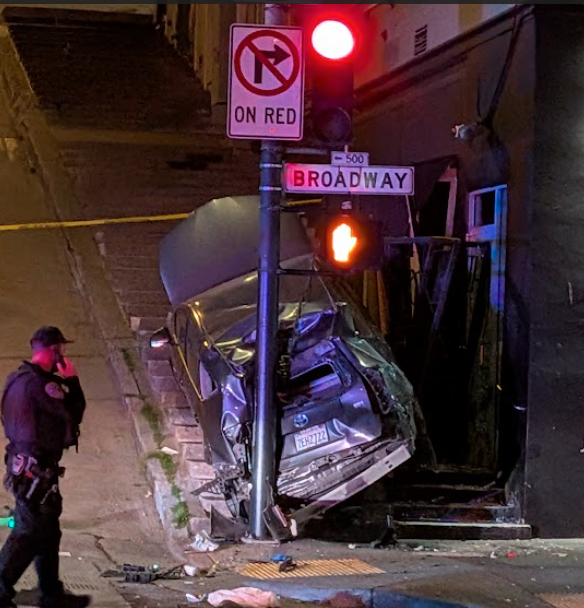
Motorist Careens onto North Beach Sidewalk, Killing Pedestrian
Driver kills pedestrian at another location where a safety project festered
The post Motorist Careens onto North Beach Sidewalk, Killing Pedestrian appeared first on Streetsblog San Francisco.