Political Piñata Amtrak Is the Fastest Growing Transportation Mode

Let it be known: Amtrak is the fastest!
Fastest-growing, that is. Since 1997, Amtrak ridership has grown 55 percent — faster than the general population, faster then GDP, faster than air travel, faster than driving, faster than any other mode of transportation.
Even in a difficult political environment, more people are choosing Amtrak, according to a new analysis by the Brookings Institution. A record 31 million passengers took advantage of the rail service in 2012.
But the picture is very uneven. Almost two-thirds of Amtrak’s total ridership comes from just ten metro areas — mostly big cities in the Northeast Corridor and in California. The New York metro area alone accounted for more than 17 percent of boardings and disembarkments. Greater Washington, D.C. accounted for a 9 percent share and Philadelphia 8.5 percent.
Big cities, in general, make up a disproportionate share of Amtrak ridership. Together, America’s 100 largest metro areas combine to produce almost 90 percent of all the agency’s trips, Brookings found.
But it appears the single biggest determinant of the success of an Amtrak line, however, is the length of the trip. Routes under 400 miles — short-distance corridors — carried 83 percent of all riders. Almost all of the ridership gains over the last 16 years came from the 26 routes that travel distances less than 400 miles. These routes, taken together, operate at a profit.
“Simply put, short-distance routes are the engines of Amtrak ridership,” wrote authors Robert Puentes, Adie Tomer, and Joseph Kane.
On the other hand, Amtrak’s 18 long-distance routes carried less than 20 percent of all riders but accounted for 43 percent of Amtrak’s route-related operating costs. Every single one of these routes lost money in 2011. Those losses were great enough to offset the gains made by the more popular routes — hence the ghastly “subsidies” that Amtrak takes such a beating for in Congress.
Brookings recommends that long-distance, money-losing routes should require state financial support. Currently, federal law requires just the opposite, requiring states only to support routes within their borders that are under 750 miles.
“The goal of such a policy reform is not to eliminate routes but to strengthen the federal-state partnership and reaffirm the commitment of states to long-distance routes over time,” the authors write. “If states cannot agree that certain routes are worth supporting, then they should be scaled back in much the same way as short-distance routes.”

Read More:
Streetsblog has migrated to a new comment system. New commenters can register directly in the comments section of any article. Returning commenters: your previous comments and display name have been preserved, but you'll need to reclaim your account by clicking "Forgot your password?" on the sign-in form, entering your email, and following the verification link to set a new password — this is required because passwords could not be carried over during the migration. For questions, contact tips@streetsblog.org.
More from Streetsblog USA
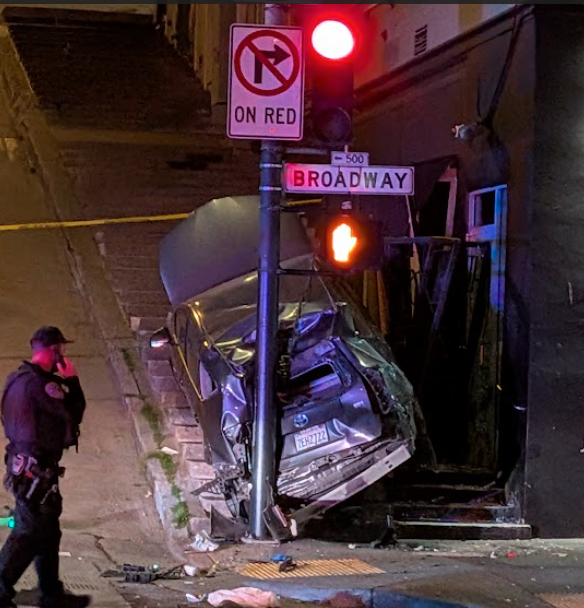
Motorist Careens onto North Beach Sidewalk, Killing Pedestrian
Driver kills pedestrian at another location where a safety project festered
The post Motorist Careens onto North Beach Sidewalk, Killing Pedestrian appeared first on Streetsblog San Francisco.