Wooing Suburban Drivers With Cheap Parking: A Losing Strategy for Cities


There may be nothing sadder than distressed cities trying to compete with the suburbs by adding more parking spaces. (We’re looking at you, Cleveland, Detroit, and Buffalo!)
Chris McCahill and Norman Garrick recently wrote in Atlantic Cities about the failure of this approach: Cities that attempt to use parking as an economic development strategy actually undermine their own cause. And today at the State Smart Transportation Institute, Mary Ebeling adds some more perspective to the research:
During the era of interstate highway construction, and the resulting demographic shift from city to suburb, municipalities worked to provide auto access to their downtowns, hoping this access would support economic growth. However, mounting evidence shows that greater automobile access came at the expense of the very economic vibrancy cities sought and does not help reduce roadway congestion. Costs associated with accommodating cars, particularly for parking, are outweighed by the long-term economic costs.
Recent research shows cities that focus on auto access experience a decline in economic activity and lack of vibrancy, suggesting a policy of prioritizing cars often fails as an economic development tool for urban areas. Municipalities with excess parking do increase driving into and within the city, but the increase in income disparity between urban core and suburban areas shows how this policy may pose equity issues.
Managing car parking does not amount to an anti-auto outlook or policy. Simply put, cities working to manage car parking are hoping to offer multi-modal transportation options that make for a vibrant urban life.
Elsewhere on the Network today: Systemic Failure shares an outrageous story about New Jersey Transit blocking pedestrian access to one of its rail stations. Commute Orlando says the Florida Department of Transportation’s campaign to reduce pedestrian fatalities is nothing more than lip service. And Bike Delaware explores the consequences of a 115-year car ban on Michigan’s Mackinac Island.

Read More:
Streetsblog has migrated to a new comment system. New commenters can register directly in the comments section of any article. Returning commenters: your previous comments and display name have been preserved, but you'll need to reclaim your account by clicking "Forgot your password?" on the sign-in form, entering your email, and following the verification link to set a new password — this is required because passwords could not be carried over during the migration. For questions, contact tips@streetsblog.org.
More from Streetsblog USA
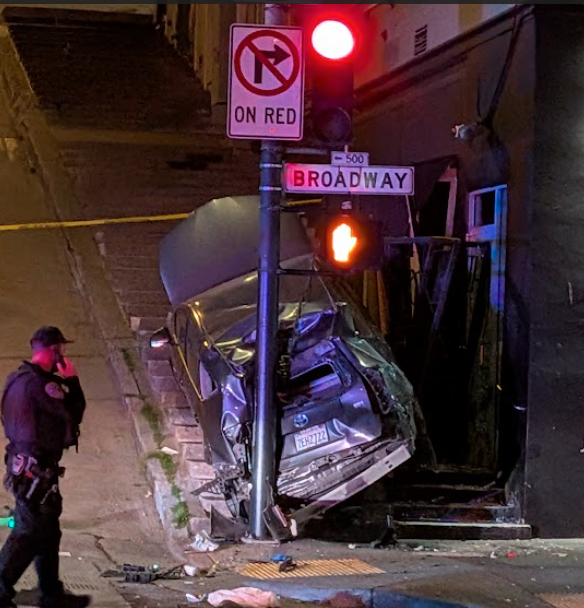
Motorist Careens onto North Beach Sidewalk, Killing Pedestrian
Driver kills pedestrian at another location where a safety project festered
The post Motorist Careens onto North Beach Sidewalk, Killing Pedestrian appeared first on Streetsblog San Francisco.