Report: Most States Have Poor Safeguards Against the Revolving Door

Last week we looked at three state DOTs which are currently led by former lobbyists for the asphalt or energy industries. The “Revolving Door” series highlighted how billions in federal funding for transportation get funneled, with no oversight, to states where money and politics corrupt policy and lead to shocking amounts of waste.
While it’s outrageous that a state DOT chief can flit back and forth between lobbying gigs and the public sector, or dole out enormous contracts designed to benefit the governor’s political benefactors, such antics aren’t limited to the three states we profiled. For a good survey of the lax ethics rules that prevail in most American statehouses (affecting not just transportation but all aspects of state policy), check out the Center for Public Integrity’s State Integrity Investigation.
CPI’s recent analysis found that loose state ethics rules and oversight are the norm, not the exception, in state capitals around the country. The group graded all 50 states, and not a single one scored an A. Only five states managed Bs. The rest were all mediocre-to-abysmal.
The three states Streetsblog examined — Ohio, Texas, and Oklahoma — received Ds for overall ethics oversight and transparency.
The report found that, across the country, state-level ethics protections are weak, and where they do exist, they often lack teeth.
Tennessee, for example, started a state ethics commission six years ago, but has yet to issue a single citation.
Notably, in CPI’s investigation, Ohio, Texas and Oklahoma all rated below 50 percent — a failing grade — on “regulating conflicts of interest by the executive branch” — the rules and oversight that would apply to state DOT directors.
The agency responsible for ethics oversight in Austin, for example, is basically set up to fail.
“The Texas Ethics Commission is comprised of appointees by the governor and legislature, which not only presents an inherent conflict but often leads to gridlock,” CPI’s Caitlin Ginley said. “Commissioners are typically split along party lines, but in order to pursue an investigation, at least six of the eight commissioners must agree.”
As a result their analysis, CPI reports, Maine is currently considering legislation that would establish “cooling off periods” preventing state officials from working for the industry they regulated immediately after leaving the public sector — an attempt to halt the “revolving door.”
Meanwhile, the next time you hear an elected official call investments in transit, biking, or walking a waste of money, keep in mind how road builders can exploit weak ethics rules to make sure billions get spent on highways to nowhere.

Read More:
Streetsblog has migrated to a new comment system. New commenters can register directly in the comments section of any article. Returning commenters: your previous comments and display name have been preserved, but you'll need to reclaim your account by clicking "Forgot your password?" on the sign-in form, entering your email, and following the verification link to set a new password — this is required because passwords could not be carried over during the migration. For questions, contact tips@streetsblog.org.
More from Streetsblog USA
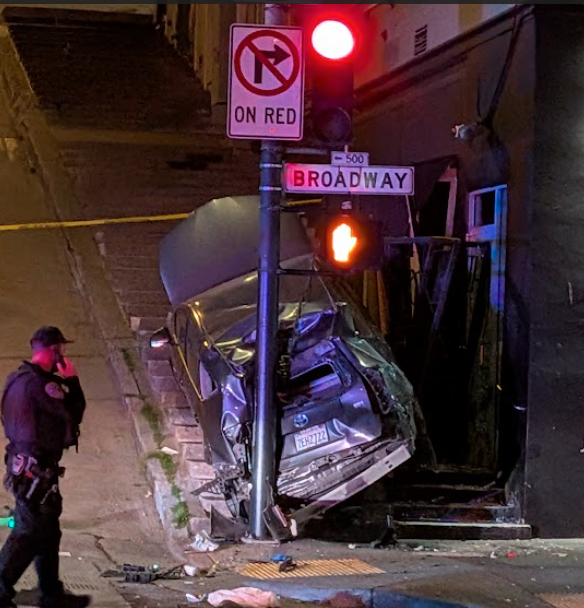
Motorist Careens onto North Beach Sidewalk, Killing Pedestrian
Driver kills pedestrian at another location where a safety project festered
The post Motorist Careens onto North Beach Sidewalk, Killing Pedestrian appeared first on Streetsblog San Francisco.