As Baby Boomers Age, They Take Their Foot Off the Gas

They may be remembered as the driving-est generation. Baby Boomers, who came of age in the heyday of suburbia, have always driven more than any other generation. At the height of their driving years, boomers averaged 51 miles per day. They continue to drive 17 percent more than all other age groups, according to a recent report from AARP.
But in 2009, for the first time since the National Household Travel Survey began asking Americans about their transportation habits, in 1969, driving declined among all age groups. And it was the second time the survey showed less driving among boomers, who are reaching retirement age, a period of life that typically coincides with decreased driving.
Which has everyone watching and wondering: How will the huge number of Americans in this age bracket respond to retirement? If boomers continue to drive less, which seems likely, that will have huge ramifications for American transportation policy.
One immediate implication is clear: If boomers drive less, and younger people continue to drive less, overall mileage per capita will continue to decline, as we’ve seen in recent years. This would mean that current transportation modeling, which predicts steadily increasing traffic volumes until the end of time, is woefully misguided.
The Associated Press, in a story on the AARP study, seized on this idea:
If boomers stop commuting in large numbers, will rush hours ease? As age erodes their driving skills, will there be a greater demand for more public transportation, new business models that cater to the home-bound or automated cars that drive themselves?
AARP says more time is needed to tell what the long-term trend will be. In the meantime, there are a few encouraging signs. The 2009 travel survey showed more boomers are making use of local buses and trains. And boomers are bicycling more as well; the AARP reports this generation’s share of bike trips increased 64 percent between 2001 and 2009.
Cutting against the these promising trends: AARP is also pretty certain seniors will remain in the suburbs, “where many of them have lived their entire lives,” and thinks smart cars hold promise for keeping aging drivers on the road longer. The organization has also joined with Transportation for America to call upon transit agencies to better serve suburban seniors who may otherwise be stuck at home.

Read More:
Streetsblog has migrated to a new comment system. New commenters can register directly in the comments section of any article. Returning commenters: your previous comments and display name have been preserved, but you'll need to reclaim your account by clicking "Forgot your password?" on the sign-in form, entering your email, and following the verification link to set a new password — this is required because passwords could not be carried over during the migration. For questions, contact tips@streetsblog.org.
More from Streetsblog USA
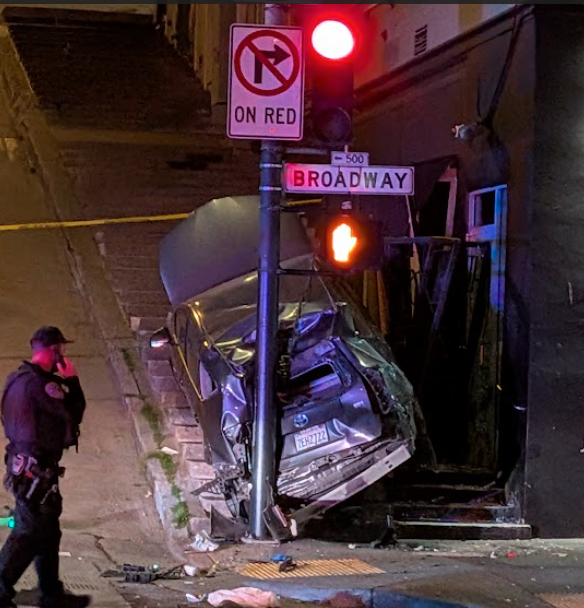
Motorist Careens onto North Beach Sidewalk, Killing Pedestrian
Driver kills pedestrian at another location where a safety project festered
The post Motorist Careens onto North Beach Sidewalk, Killing Pedestrian appeared first on Streetsblog San Francisco.