Study: 10% More Smart Growth = 20% Less Driving
A professor at San Francisco State University recently developed an econometric model to study how smart growth affects travel behavior. His finding: quite a bit.

Dr. Sudip Chattopadhyay measured the impact of certain smart growth indicators on 18 metro areas across the U.S. He found that a 10 percent increase in smart growth amenities — measured by residential and job density and per-capita transit spending — leads to a 20 percent reduction in miles driven.
“This is a huge impact,” said Chattopadhyay. “Success is gradual and long lasting.”
The study, published in the B.E. Journal of Economic Analysis and Policy, set out to determine if smart growth or taxation strategies like increasing the fuel tax has a bigger impact on driving behavior. His finding was that smart growth produced a bigger return: 18 percent reduction for taxing versus 20 percent for smart growth.
Further, the study found that if mid-sized California cities like Modesto, Fresno and Bakersfield had similar density and transit amenities as some of the state’s larger cities — the Bay Area and Los Angeles — they could expect to see a 55 percent reduction in per household driving activity, or about 5,238 miles per year.
Chattopadhyay said his findings lend support to California’s State Bill 375 and Assembly Bill 32. Both laws promote efficient land use to help curb global warming. The study did not examine other benefits of smart growth, such as better health and environmental outcomes.

Read More:
Streetsblog has migrated to a new comment system. New commenters can register directly in the comments section of any article. Returning commenters: your previous comments and display name have been preserved, but you'll need to reclaim your account by clicking "Forgot your password?" on the sign-in form, entering your email, and following the verification link to set a new password — this is required because passwords could not be carried over during the migration. For questions, contact tips@streetsblog.org.
More from Streetsblog USA
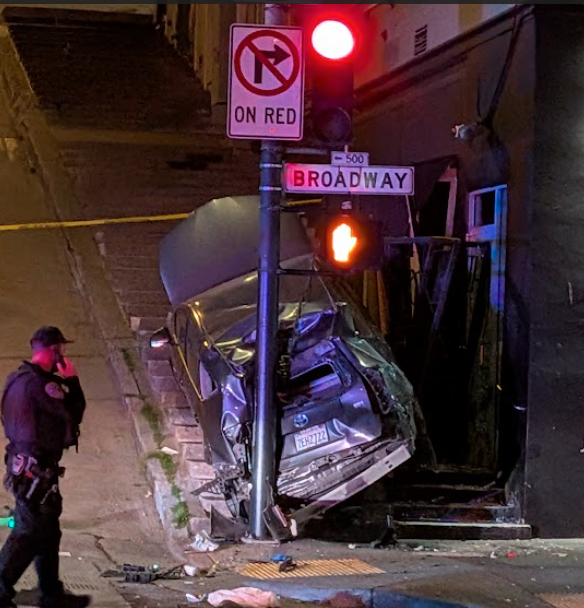
Motorist Careens onto North Beach Sidewalk, Killing Pedestrian
Driver kills pedestrian at another location where a safety project festered
The post Motorist Careens onto North Beach Sidewalk, Killing Pedestrian appeared first on Streetsblog San Francisco.