What If We Supplied Hamburgers the Same Way We Supply Roads?
The concept of “induced demand” for road space essentially means that new, or widened, highways will entice more drivers onto the roads, negating any congestion-reducing benefits of the new road.

But induced demand doesn’t just apply to roads. Broadly speaking, it’s an economic concept that goes something like this: If something is free, or low cost, people will consume more of it.
Here’s an analogy, courtesy of a commenter at Greater Greater Washington, that gets to the heart of the matter:
Let’s give everyone free McDonald’s hamburgers. Let’s put 10,000 hamburgers a day on a table in front of the Capitol (or wherever).
What would happen? People would take and eat the hamburgers, and once word got out, all 10,000 hamburgers would be taken very quickly every day. We may thus infer that because people need food and they really seemed to like those burgers, McDonald’s hamburgers are an important public good.
A city planner might notice a problem: those 10,000 hamburgers just aren’t enough. They get taken very early in the morning, so not everybody has a chance to get a hamburger. The obvious solution—because burgers are a highly-valued public good—is to provide more free burgers. So the city planner starts to provide 20,000 hamburgers a day.
You can see where this is going. People start going out of their way to get the free hamburgers, and planning their day around that trip. The city has to keep providing more and more free burgers—eventually millions a day—to keep satisfying the demand for free hamburgers.
Elsewhere on the Network today: Kaid Benfield at the Natural Resources Defense Council’s Switchboard blog says advocates for sustainable cities should be careful not to parrot buzzwords like “vibrant” so often they become meaningless. Walkable Dallas Fort Worth attempts to quantify the economic value that bustling sidewalks bring to a city. And Strong Towns wonders whether we’re seeing a fundamental shift in the way people view and value car parking facilities.

Read More:
Streetsblog has migrated to a new comment system. New commenters can register directly in the comments section of any article. Returning commenters: your previous comments and display name have been preserved, but you'll need to reclaim your account by clicking "Forgot your password?" on the sign-in form, entering your email, and following the verification link to set a new password — this is required because passwords could not be carried over during the migration. For questions, contact tips@streetsblog.org.
More from Streetsblog USA
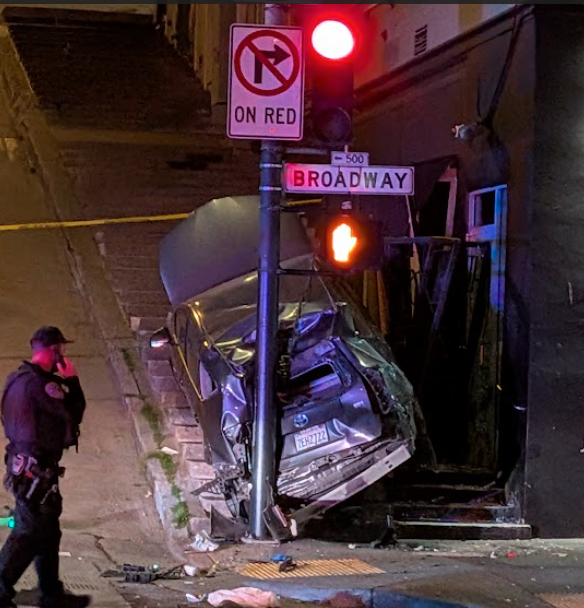
Motorist Careens onto North Beach Sidewalk, Killing Pedestrian
Driver kills pedestrian at another location where a safety project festered
The post Motorist Careens onto North Beach Sidewalk, Killing Pedestrian appeared first on Streetsblog San Francisco.