Syncing Traffic Lights No Sure-Fire Way to Reduce Emissions
From a motorist’s perspective, few things are more frustrating than sitting at a red light when the lights ahead are all green. That would help explain the popularity of traffic signal synchronization, neatly timing lights so that someone traveling the speed limit can expect to wait only every several cycles.
Many communities have seized on synchronization as a relatively inexpensive way to reduce congestion and emissions. In fact, it’s one of the approved uses for Congestion Mitgation and Air Quality money from the federal government.

But it’s not quite as simple as it seems, says Network blog Transport Nexus. Some research has shown traffic signal synchronization can actually increase emissions, by encouraging more driving:
Traffic engineering has long been full of promises on solving road congestion, with many solutions worse than the problem. When roads have been widened or new roads built, induced demand has been the result. If we make all of our signals “smart” and easy for people to drive in the city, what happens then? We’ll see a mode shift away from alternative transportation options as people discover that synchronized traffic signals make driving easier, thus increasing demand for driving.
Making driving easier brings all the negative externalities to the fore: increased auto emissions, gas consumption and pressure on land uses to accommodate cars. Thus, while traffic signal synchronization seems like a good idea, the unintended consequences are likely to make the existing traffic congestion status quo even worse.
Where I live in Cleveland, traffic signals have never been coordinated (or thinned out as the population has shrunk), and the headache of driving in Cleveland is one of the major reasons I started biking. Too bad our metropolitan planning organization still spends the bulk of its CMAQ money on traffic signal synchronization and not on bike lanes.
Elsewhere on the Network today: Reinventing Parking explains why American parking policies are like vanilla ice cream, European parking policies are like dark chocolate, and Japanese regs are like a sushi bar. Cap’n Transit says that evicting everyday activity from the street — like child’s play — has contributed to chaos on the sidewalks. And Cycling Solution says that bus lanes are now open to cyclists in Budapest.

Read More:
Streetsblog has migrated to a new comment system. New commenters can register directly in the comments section of any article. Returning commenters: your previous comments and display name have been preserved, but you'll need to reclaim your account by clicking "Forgot your password?" on the sign-in form, entering your email, and following the verification link to set a new password — this is required because passwords could not be carried over during the migration. For questions, contact tips@streetsblog.org.
More from Streetsblog USA
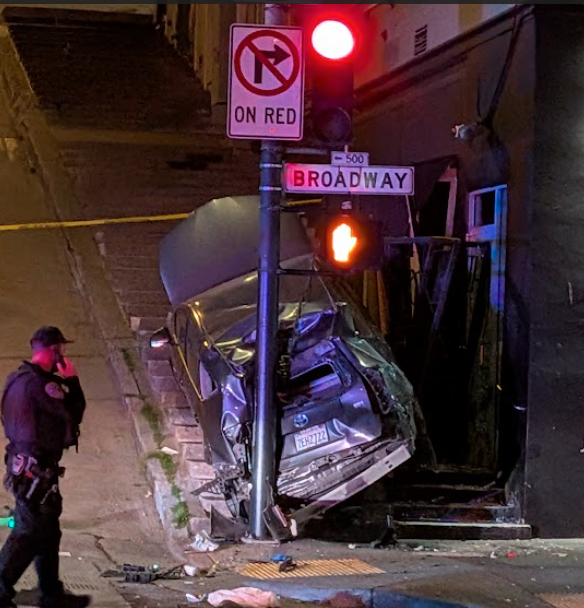
Motorist Careens onto North Beach Sidewalk, Killing Pedestrian
Driver kills pedestrian at another location where a safety project festered
The post Motorist Careens onto North Beach Sidewalk, Killing Pedestrian appeared first on Streetsblog San Francisco.