Mapped: Dramatic Changes on London Streets in the Congestion Pricing Era

For the last nine years, private motorists entering central London between 7 a.m. and 6 p.m. have paid a fee (currently £10 or US$16.22) to drive on the city’s scarce street space. The revenue from the congestion charge is plowed into the city’s transit system, and as Transport for London has amply documented, many Londoners have changed their commuting habits.
Now a flurry of maps released by ITO World, a British company that specializes in visualizing transport data, shows London’s dramatic shift to more sustainable modes from 2001-2010. (The congestion charge went into effect in February 2003.)
The map above depicts the extraordinary decrease in private motor vehicle traffic, with the bright blue dots showing where driving has gone down more than 30 percent and the bright red dots showing where it’s up more than 30 percent. By the looks of it, the drivable suburbs are still a bastion of private vehicles, but the central city is seeing far less traffic.
Of course, people aren’t just sitting at home. They’ve embraced other ways of getting around. So while there are fewer vehicles in London now than in 2001, one motorized mode has become more ubiquitous: the bus.
London bus ridership has risen an impressive 60 percent in the past decade.
Bicycling has also been a big winner in this seismic shift in travel habits. Cycling is up 110 percent in London since 2000. In the country as a whole, cycling on the road has increased 12 percent.
ITO World CEO Peter Miller says it’s not just the congestion charge that’s reducing the footprint of cars on London’s streets. It’s also the phenomenon of “peak car” — the less-understood pattern, happening in several industrialized countries, of diminishing car use. According to the Wikipedia article on “peak car” that Miller co-wrote, traffic into London had already fallen 28 percent in the nine years before the congestion charge was implemented. He gives many possible reasons for peak car, including rising gas prices and a growth in the culture of urbanism.

Read More:
Streetsblog has migrated to a new comment system. New commenters can register directly in the comments section of any article. Returning commenters: your previous comments and display name have been preserved, but you'll need to reclaim your account by clicking "Forgot your password?" on the sign-in form, entering your email, and following the verification link to set a new password — this is required because passwords could not be carried over during the migration. For questions, contact tips@streetsblog.org.
More from Streetsblog USA
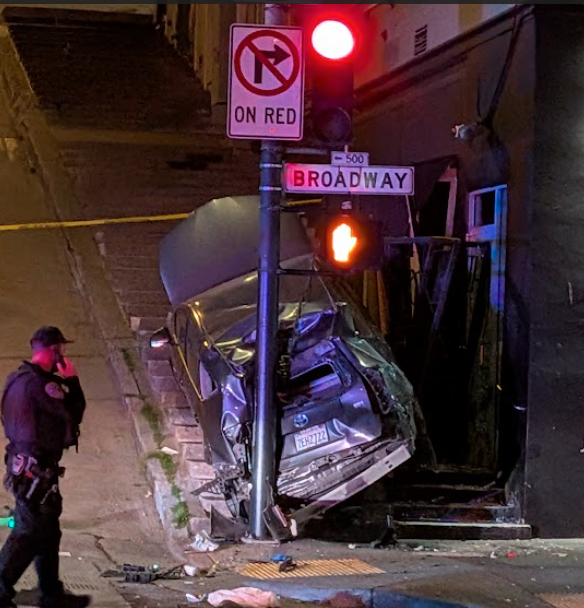
Motorist Careens onto North Beach Sidewalk, Killing Pedestrian
Driver kills pedestrian at another location where a safety project festered
The post Motorist Careens onto North Beach Sidewalk, Killing Pedestrian appeared first on Streetsblog San Francisco.