When “Old and Blighted” Development Beats “Shiny and New” Suburbanism

There are plenty of hidden costs to auto-oriented development: increased levels of air and water pollution, safety risks posed to pedestrians and cyclists. But as Strong Towns Blog points out, some costs are hardly hidden at all.
The authors of the comprehensive plan for Brainerd, Minnesota (pop: 13,590) probably thought they had a great idea: Take the properties along busy Highway 210 in the east part of town, an assortment of run-down or vacant storefronts, and encourage their replacement by “highway-oriented businesses.” The plan bases this strategy on the idea that “having a strong highway commercial area… provides for a healthy downtown.”
“The problem,” writes Charles Marohn of Strong Towns, “is that ‘strong’ and ‘highway commercial’ are – in almost all cases – mutually exclusive terms.” Furthermore, the “fast food restaurants, convenience stores, gas stations and other auto-oriented businesses” promoted by the comprehensive plan are actually worth less to the city than the marginal establishments that are there already.
Marohn compares the “old and blighted” development on one block — the kind of development the town would like to get rid of — to the “shiny and new” development down the street, a fast food joint with lots of surface parking:

The eleven old and blighted lots [above left] — some of the most undesirable commercial property in the city — arranged in the traditional development pattern along the incompatible, major arterial of Highway 210 have a combined tax base of $1,136,500.
To compare, the Taco John’s property [above right] — the one that is not only shiny and new but configured precisely as the city of Brainerd desires the old and blighted properties to someday be — has a total valuation of only $803,200.
At its nastiest and most decrepit, fighting the negative auto traffic speeding by and the absence of pedestrian connectivity, lacking all natural advantage from the neighboring land uses that would ideally accompany a traditional neighborhood design, the old and blighted traditional commercial block still outperforms the new, auto-oriented development by 41%. [emphasis his]
The city is shrinking its own tax base by encouraging businesses to turn their backs on traditional Main Streets in favor of busy arterial highways. A cheaper way to maximize these parcels’ value, according to Marohn, would be to restore connectivity to the nearby residential area.

Streetsblog has migrated to a new comment system. New commenters can register directly in the comments section of any article. Returning commenters: your previous comments and display name have been preserved, but you'll need to reclaim your account by clicking "Forgot your password?" on the sign-in form, entering your email, and following the verification link to set a new password — this is required because passwords could not be carried over during the migration. For questions, contact tips@streetsblog.org.
More from Streetsblog USA
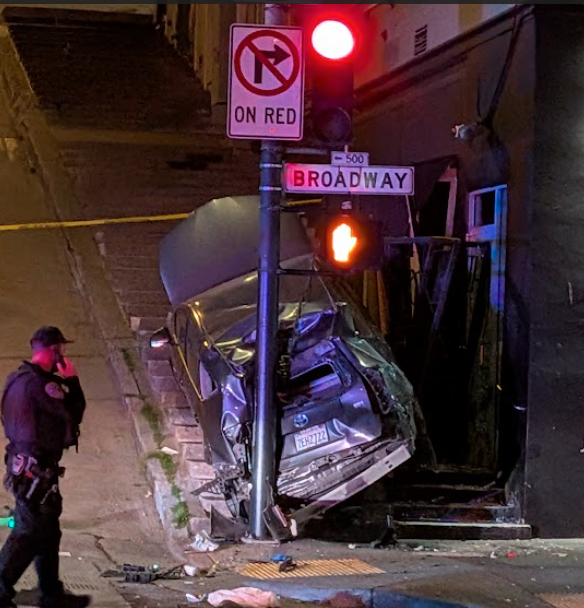
Motorist Careens onto North Beach Sidewalk, Killing Pedestrian
Driver kills pedestrian at another location where a safety project festered
The post Motorist Careens onto North Beach Sidewalk, Killing Pedestrian appeared first on Streetsblog San Francisco.