Nearly Half of TIGER Award Money Goes to Roads, 29 Percent For Transit


If you live in Stamford, Connecticut and your walk to the train station gets safer next year, you can thank USDOT’s TIGER grant program. Or when your hometown of American Falls, Idaho suddenly gets complete streets downtown, accommodating people on foot, on bikes, on buses, in cars, and in wheelchairs, encouraging local shopping. Or when you realize that traffic congestion between Olympia and Tacoma, Washington has eased, not by adding lanes but by installing intelligent technology to manage traffic and encourage ridesharing.
All 46 of the TIGER III award grantees have been announced now, and there are sure to be more communities disappointed than excited, given that there were 828 applications totaling $14.1 billion and USDOT had only $511 million to give. The money went to 33 states and Puerto Rico. USDOT was careful to include many rural projects, though those tend to be the smallest grant awards. Twenty of the 46 projects are in rural areas, but they only amount to about 30 percent of the total outlay. (Check out Transportation for America’s fantastic interactive map of grantees from all three rounds of TIGER.)
All in all, 48 percent of the projects fund roadwork, with about a quarter of those funds paying for complete streets treatments like the one in American Falls. Another 29 percent goes to transit – a far better shake for transit than generally comes of the normal Congressional appropriations process. Twelve percent went to ports, 10 percent for freight rail, and two percent for passenger rail.
LaHood praised the job creation potential of the funds, saying in a statement, “When President Obama said, ‘We can’t wait,’ to take action to put people back to work, DOT took that to heart. And, with the announcement of our third round of TIGER funding, we’re making it clear: we didn’t wait.”
Indeed, he said work is currently underway on 33 planning projects and 58 capital projects from the first two rounds of TIGER funding.
The biggest four projects this time around, each receiving $20 million, were the Chicago Blue Line renewal and city bike-share, HOT lanes for a heavily congested stretch of I-95 in Northern Virginia, improved and safer flow of vehicular and pedestrian traffic in St. Louis, and support for a TIFIA loan to extend express lanes on SR-91 in Southern California. Most of these projects have total costs that make the $20 million contribution look like a drop in the bucket – the SR-91 project alone will cost $1.3 billion. TIGER takes a bigger bite out of the Chicago project, whose total cost is significantly lower than the others at $64.6 million.
LaHood praised his department for getting the announcement out months ahead of schedule, but it stands to reason: The initial February deadline had become an end-of-year mandate, and LaHood was being called a Grinch for ruining department employees’ holiday breaks by making them work on TIGER applications during break. Apparently they hustled to get them done in time to relax with their families a little over the holiday.
The full list of projects, with descriptions, is available on the U.S. DOT website [PDF].

Read More:
Streetsblog has migrated to a new comment system. New commenters can register directly in the comments section of any article. Returning commenters: your previous comments and display name have been preserved, but you'll need to reclaim your account by clicking "Forgot your password?" on the sign-in form, entering your email, and following the verification link to set a new password — this is required because passwords could not be carried over during the migration. For questions, contact tips@streetsblog.org.
More from Streetsblog USA
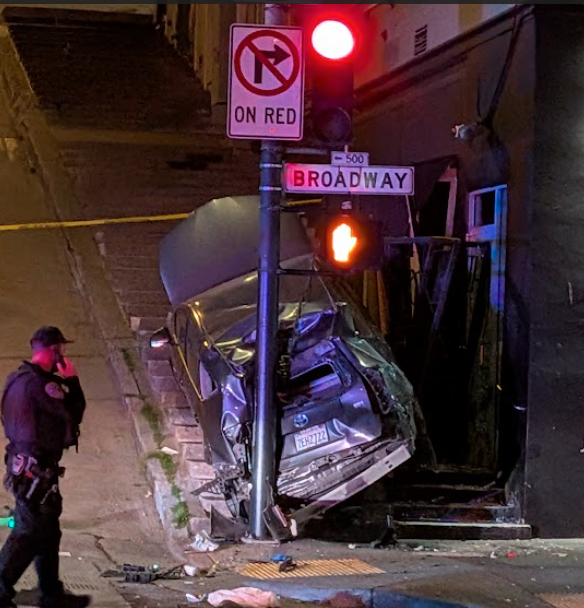
Motorist Careens onto North Beach Sidewalk, Killing Pedestrian
Driver kills pedestrian at another location where a safety project festered
The post Motorist Careens onto North Beach Sidewalk, Killing Pedestrian appeared first on Streetsblog San Francisco.