An Australian Perspective on Urban-Suburban Politics
It says a lot about the state of politics in this country that the health of America’s cities has become a political wedge issue. Particularly in this latest round of budget debates, we saw program after program of particular importance in urban centers get the ax.

How did this happen? How can America “win the future” without consensus about the importance of healthy cities?
Jarrett Walker at Human Transit has been thinking about this issue. In a post today he points to the relative lack of urban-suburban political conflict in Australia, where the conservative party recently announced its support for the national transit investment program:
It’s interesting to think about why urban issues that are bipartisan in Australia seem to become Democratic concerns in the US. In both countries, most of the population lives in urban areas, but there is a crucial difference in language that creates a difference in habits of thought. Americans think of big “cities” as separate from their “suburbs,” and often use these terms as shorthand or euphemism for a range of other oppositions. (Only in America, for example, would a style of music associated with black people be called “Urban.”) Americans also have the idea of a suburban center (what Joel Garreau calls an “Edge City’) that clings to the outer orbit of a big city but can think of itself as unrelated to it. Hence someone in Tyson’s Corner, Virginia, say, may be happier thinking of their metro area as “Northern Virginia” rather than “greater Washington DC.”
Those word choices lead to a US political reality in which big cities — narrowly defined in exclusion of their suburbs — represent a minority of the population and thus attract the interest of only one side of the political divide.
By contrast, when Australians say “Sydney” or “Melbourne” they usually mean the entire urban area — the continuous patch of lights that you see from an airplane. So people who live in what Americans would call the suburbs of Sydney think of themselves as living in Sydney. This way of speaking encourages them to accept that the problems of Sydney are their problems, whereas a resident of Tyson’s Corner may feel quite removed from the problems of “Washington.” When cities are understood in that inclusive way, it follows that most Australians live in cities, so naturally both sides of the political divide must care about them.
Thanks to Jarrett for the reminder that we’re more competitive as a nation when our cities and suburbs aren’t in competition with each other.
Elsewhere on the Network today: Matt Yglesias says Washington’s refusal to consider a gas tax increase will put the country on a path to disaster. The Austin Contrarian ponders the inverse relationship between bus driver’s wages and the breadth of service in Austin. And Transit Miami reports that an SUV driver’s assault on a cyclist led to arrest thanks to a handlebar-mounted camera.

Read More:
Streetsblog has migrated to a new comment system. New commenters can register directly in the comments section of any article. Returning commenters: your previous comments and display name have been preserved, but you'll need to reclaim your account by clicking "Forgot your password?" on the sign-in form, entering your email, and following the verification link to set a new password — this is required because passwords could not be carried over during the migration. For questions, contact tips@streetsblog.org.
More from Streetsblog USA
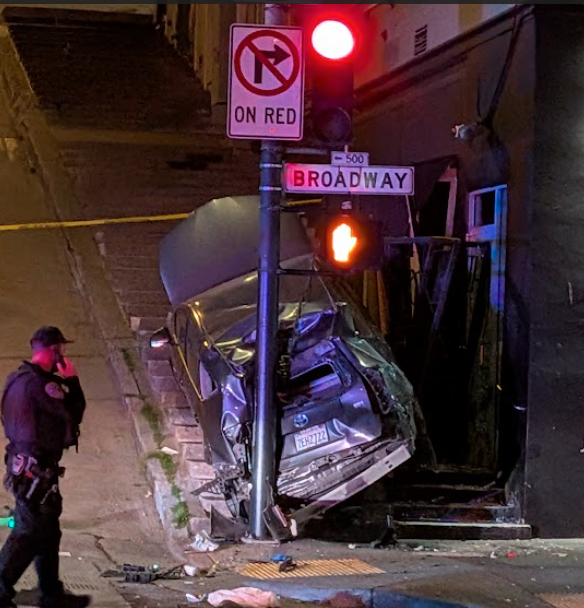
Motorist Careens onto North Beach Sidewalk, Killing Pedestrian
Driver kills pedestrian at another location where a safety project festered
The post Motorist Careens onto North Beach Sidewalk, Killing Pedestrian appeared first on Streetsblog San Francisco.