GAO: Trucking the Least Efficient Mode of Freight Shipping

Freight transportation, which accounts for nearly a quarter of transportation-related greenhouse gas emissions, doesn’t get as much attention as passenger transportation because most people don’t feel it affects them as much. But more than 15 million trucks deliver 70 percent of the goods this country consumes – and the GAO says that’s a mistake.

The Government Accountability Office published a study finding that the costs of freight trucking that are not passed on to the consumer are at least six times greater than the equivalent rail costs and at least nine times greater than the equivalent waterways costs. Many of those are externalized costs passed on to society – like congestion, pollution, and crashes – as well as public costs, like infrastructure maintenance.
These externalized and public costs are just another way that taxpayers subsidize highways. The GAO implies that the country’s highway-centric transportation policy could be damaging the economy.
“When prices do not reflect all these costs, one mode may have a cost advantage over the others that distorts competition,” writes the GAO. “As a consequence, the nation could devote more resources than needed to higher cost freight modes, an inefficient outcome that lowers economic well-being.”
The report goes on to say, “If government policy gives one mode a cost advantage over another, by, for example, not recouping all the costs of that mode’s use of infrastructure, then shipping prices and customers’ use of freight modes can be distorted, reducing the overall efficiency of the nation’s economy.”
The GAO didn’t make recommendations in this report but did say that policy changes that make prices align with the true costs of freight shipping would provide a great economic benefit. Less targeted changes, like charging user fees, subsidizing more efficient alternatives, or applying safety or emissions regulations – could be helpful as well. The report acknowledges that “the current configuration of transportation infrastructure can limit the shifting of freight among modes.”
After all, we’ve been building a lot more highways than railroads lately.

Streetsblog has migrated to a new comment system. New commenters can register directly in the comments section of any article. Returning commenters: your previous comments and display name have been preserved, but you'll need to reclaim your account by clicking "Forgot your password?" on the sign-in form, entering your email, and following the verification link to set a new password — this is required because passwords could not be carried over during the migration. For questions, contact tips@streetsblog.org.
More from Streetsblog USA
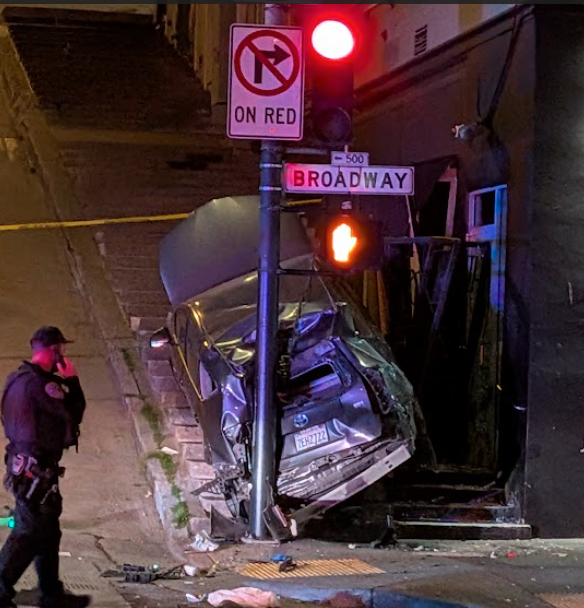
Motorist Careens onto North Beach Sidewalk, Killing Pedestrian
Driver kills pedestrian at another location where a safety project festered
The post Motorist Careens onto North Beach Sidewalk, Killing Pedestrian appeared first on Streetsblog San Francisco.