Biggest TRB Meeting Ever Highlights Visionary Bicycle Research

If you attended last week’s annual meeting of the Transportation Research Board, you were one of 10,900 people presenting 2,200 papers and 2,500 slide presentations on everything from the conspicuity of pavement markings to complete streets for blind pedestrians.

TRB changed in 1976 from a highway research board to a multimodal focus, and now “TRB can be just about anything to anyone depending on where you are in the industry,” attendee Erik Weber told Streetsblog. He works on mobility for seniors at the Federal Transit Administration. And there’s a TRB subcommittee that focuses on senior transportation issues. “Whether you’re an academic, or a professional, or a policymaker, there are sessions for any of that.”
For some policy types, though, the strict focus on research can be alienating. “It’s a research crowd, and they’re wary of people that want to talk policy,” says Andy Clarke, Executive Director of the League of American Bicyclists. Still, he says, it’s encouraging to see how bicycle research has taken off. “When I first went to TRB in 1988, there were about seven people out of a crowd of 7,000 that were interested in bicycle issues. Now there are two pages of bike-specific sessions on the agenda.”
And some of the research coming out could result in better bicycling facilities.
Take, for example, Jennifer Dill’s research at Portland State on how cyclists choose routes. By monitoring a cyclist’s entire trip, Dill can tell what the shortest route would have been, and how much the cyclist was willing to go out of his way to ride on a bike boulevard or cycletrack or to avoid a steep hill. It helps engineers understand how strongly cyclists prefer to use bike facilities and where those facilities should go. Ralph Buehler’s work on the correlation between miles of bike facilities and higher mode share for bikes has a similar impact.
Still, as a research institution that keeps some distance from the world of transportation activism, TRB isn’t always focused on the research that would be the most useful to advocates.
Darren Flusche of the Bike League says what’s really needed is the most basic data of all: how many people are cycling and how much.
“We know from rough counts that bicycling is going up and fatalities are going down,” Flusche said. “But to really understand the safety and risk of cycling we need to know how many cyclists are riding and for how long or how far. And it’s not just safety – to understand bicycling’s contribution to health or the environment or the economy, we need to know how many people are riding and how much.”
The National Household Travel Survey is the main source of trip numbers but it comes out sporadically. And the American Community Survey records only one mode per respondent. The survey asks how you got to work most days last week. So if a respondent bikes to work two days a week and drives three, she’s only recorded as a driver.
TRB’s 200+ committees make recommendations on what research needs to be done, who should sponsor it, and how much funding it should get, but TRB doesn’t have the authority to parcel out research grants.

Read More:
Streetsblog has migrated to a new comment system. New commenters can register directly in the comments section of any article. Returning commenters: your previous comments and display name have been preserved, but you'll need to reclaim your account by clicking "Forgot your password?" on the sign-in form, entering your email, and following the verification link to set a new password — this is required because passwords could not be carried over during the migration. For questions, contact tips@streetsblog.org.
More from Streetsblog USA
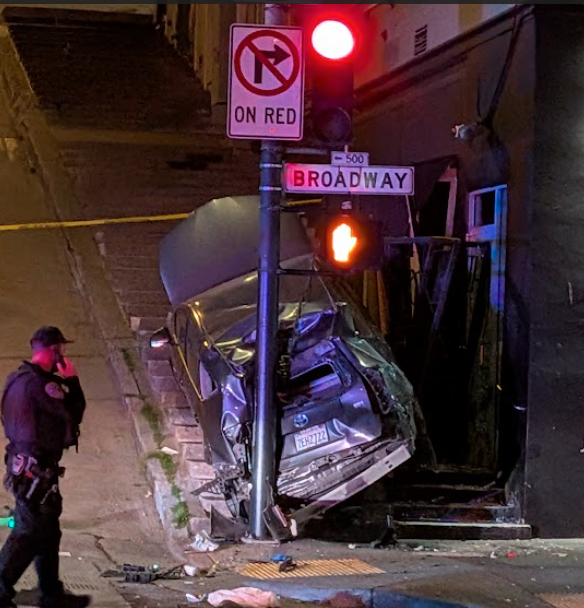
Motorist Careens onto North Beach Sidewalk, Killing Pedestrian
Driver kills pedestrian at another location where a safety project festered
The post Motorist Careens onto North Beach Sidewalk, Killing Pedestrian appeared first on Streetsblog San Francisco.