Food Deserts: Another Way the Deck Is Stacked Against Car-Free Americans

Slate has posted this map to illustrate the concentration of “food deserts,” where large numbers of people don’t have access to fresh food. The USDA considers households more than a mile from a supermarket and without access to a car to be in food deserts, often with only convenience-store junk food for nourishment. In 2009, the agency found 2.3 million of these households. Here, Slate shows the preponderance of those households in Appalachia and the Deep South, and on Indian reservations.

Access to healthy food is just one reason to build walkable places with a mix of uses and diverse transportation options. The places on this map are where people have been stranded — how walkable can your neighborhood be if you can’t walk to buy fresh produce? Many of the people identified here are poor and can’t afford cars. Some are elderly or disabled and can’t drive.
The most vulnerable members of our communities are the ones most hurt by transportation policies that keep a singular focus on automobile transportation and ignore those who need other ways to get around. What Slate is calling a food desert, you could also call an unlivable neighborhood, where even residents’ most basic needs — like access to healthy food — are denied.

Read More:
Streetsblog has migrated to a new comment system. New commenters can register directly in the comments section of any article. Returning commenters: your previous comments and display name have been preserved, but you'll need to reclaim your account by clicking "Forgot your password?" on the sign-in form, entering your email, and following the verification link to set a new password — this is required because passwords could not be carried over during the migration. For questions, contact tips@streetsblog.org.
More from Streetsblog USA
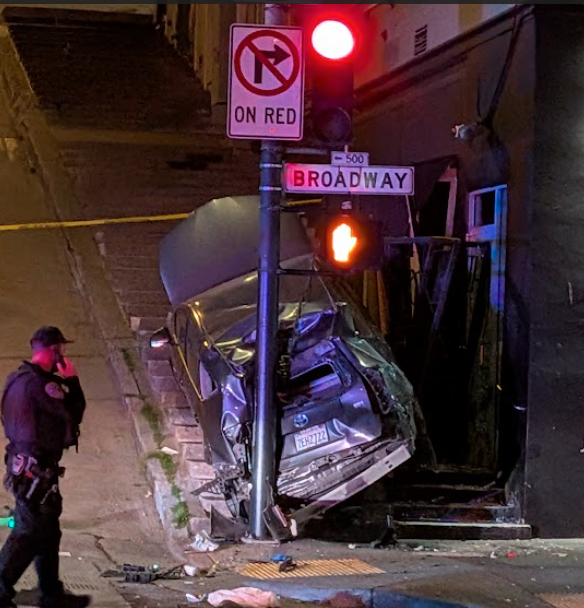
Motorist Careens onto North Beach Sidewalk, Killing Pedestrian
Driver kills pedestrian at another location where a safety project festered
The post Motorist Careens onto North Beach Sidewalk, Killing Pedestrian appeared first on Streetsblog San Francisco.