U.S. DOT Unveils Full List of TIGER II Winners

The complete list of TIGER II grants has been released by U.S. DOT today, after members of Congress revealed many winners last week. In keeping with the department’s livability goals, the list is filled with transit projects (especially streetcar lines), efforts to bolster the country’s non-trucking freight network, and fix-it-first projects aimed at deteriorating roads and bridges.

The largest grant overall went to Atlanta’s streetcar project, as Tanya reported on Friday. Salt Lake City’s Sugar House Streetcar project also got a big win, nabbing a $26 million grant. The line, which will be integrated with the larger TRAX transit system, is expected to have a daily ridership of 3,000 and take 800 cars off the road, according to the U.S. DOT’s project description. In keeping with a commitment to multi-modalism, the line is being designed with room for links in the region’s trail system.
After the Atlanta streetcar, the next largest grant went to Fort Worth, Texas, for improvements to the freight rail system. The Tower 55 project would add freight capacity by building new track and improving signaling where two railroad lines cross in downtown Forth Worth. That’s expected to increase the number of trains that can pass through the intersection by 40 percent, allow train speeds to increase from 10 mph to 30 mph, and ease delays on freight, AMTRAK and commuter rail lines. The project will also build pedestrian and bike underpasses to eliminate dangerous at-grade crossings.
The TIGER II grants aren’t limited to urban areas. In rural northwest Tennessee, for example, the program is providing $13 million to build a port at Cates Landing, on the Mississippi River. That’s intended to encourage barge shipping and spur economic development in an area where 37 percent of residents live below the poverty line.
Nearly half of the TIGER grants given out weren’t for construction but for supporting the planning process. Many of those planning grants were jointly given out by DOT and HUD, a sign of the ongoing integration of transportation and land use policies by the Obama Administration. For example, Denver received a joint $1.1 million grant to support affordable housing and transit-oriented development along the new West Corridor light rail line. The Denver Housing Authority owns 62 acres of land along the line, and this grant will enable it to spur transit-oriented development while creating an affordable housing land bank — so that as the corridor grows, it will do so equitably.
Overall, 29 percent of TIGER II funding went to road projects, 26 percent to transit, 20 percent to rail, 16 percent to ports, four percent to bicycle and pedestrian projects, and five percent for planning grants. Importantly, the largest road projects weren’t highway expansions but fix-it-first bridge repairs. In Seattle, for example, TIGER II money will replace the South Park Bridge, which was declared unsafe and closed in June; the new bridge will have both sidewalks and bike lanes in each direction.

Streetsblog has migrated to a new comment system. New commenters can register directly in the comments section of any article. Returning commenters: your previous comments and display name have been preserved, but you'll need to reclaim your account by clicking "Forgot your password?" on the sign-in form, entering your email, and following the verification link to set a new password — this is required because passwords could not be carried over during the migration. For questions, contact tips@streetsblog.org.
More from Streetsblog USA
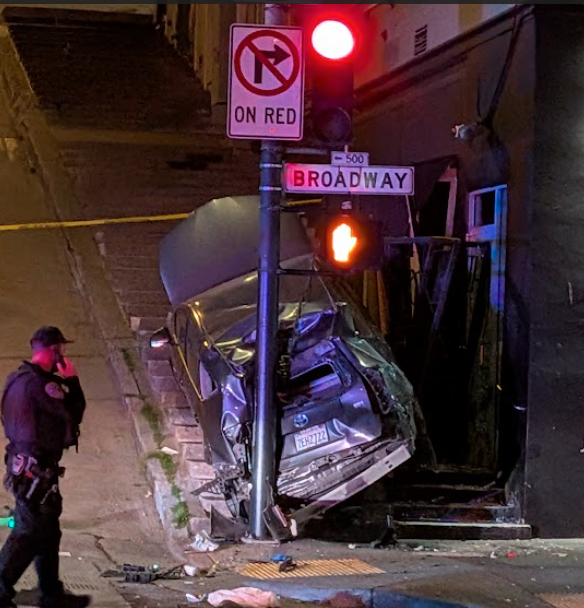
Motorist Careens onto North Beach Sidewalk, Killing Pedestrian
Driver kills pedestrian at another location where a safety project festered
The post Motorist Careens onto North Beach Sidewalk, Killing Pedestrian appeared first on Streetsblog San Francisco.