High-Speed Rail: Do We Have the Will?

Tomorrow morning, I’m getting on a train from Washington, DC to New York. It’s going to take me almost three-and-a-half hours to get there.

Sure, I could pay more for an Acela and get there in less than three hours.
But why can’t it take 90 minutes?
Yesterday, Amtrak unveiled a plan [PDF] to build a high-speed rail line between Washington and Boston, with trains running up to 220 miles per hour. Estimated travel time between DC and New York: 96 minutes. New York to Boston: 84 minutes.
And the price tag? They’re expecting it to cost $4.7 billion a year for more than 25 years.
The high cost of the project has led observers to characterize it as worthy but improbable. Like many conversations about the future of rail, this one is full of hand-wringing about how to pay for it all. So what are the options?
First, according to Mark Reutter, author of Making Steel, there’s the Highway Trust Fund, which pays for both highways and transit. In a recent policy paper, Reutter states that “Congress could easily allot $5 billion a year for HSR construction – without an increase in the gas tax – by cutting out earmarks and formula-based grants that now soak up billions of dollars.” His numbers come from a government oversight report on the ineffectiveness of the current HSR program.
But at a panel discussion today in Washington on the issue, Ken Orski, founder of the transportation newsletter “Innovation Briefs,” said using the Highway Trust Fund is a nice idea, but “any such proposal would raise howls of indignation and opposition not just from the highway interests but also from transit.” He’s in favor of an independent Rail Trust Fund.
Another strategy is to identify who would benefit from high-speed rail and find a way to get them to contribute to its cost.
Pierce Homer, transportation director at the engineering firm Moffat & Nichol, is a proponent of this approach, known as “value-capture.” “Who benefits from HSR? What are the economic benefits?” he asked. “There have to be individuals, organizations, institutions, regions, quarters that see benefit and value from an investment in high-speed rail and are willing to pay for it.”
Homer said it hasn’t been common for HSR to be funded this way, but value capture techniques are frequently applied to transit. He cited the Dulles rail extension in Northern Virginia. “About $400 million of that two-and-a-half billion dollar project are being paid for by commercial real estate,” he said, noting that office buildings and office parks in the area signed a petition asking to be taxed in support of the rail extension.
The potential of rail to jump-start economies along the corridor suggests that it should be feasible for some of that value to help pay for the rail line itself.
When a Spanish woman in the audience mentioned her country’s system (in addition to the oft-cited ones in Germany and Japan) as a model for fast and reliable rail service, Petra Todorovich of the Regional Plan Association noted that the Spanish HSR network has been paid for with general government funds. Spain also got huge financing bonuses and grants from the European Union.
Ultimately, Todorovich suggested, the most important resource Spain has drawn upon is political will. “In that country, their High-Speed Rail program is a national priority.”

Read More:
Streetsblog has migrated to a new comment system. New commenters can register directly in the comments section of any article. Returning commenters: your previous comments and display name have been preserved, but you'll need to reclaim your account by clicking "Forgot your password?" on the sign-in form, entering your email, and following the verification link to set a new password — this is required because passwords could not be carried over during the migration. For questions, contact tips@streetsblog.org.
More from Streetsblog USA
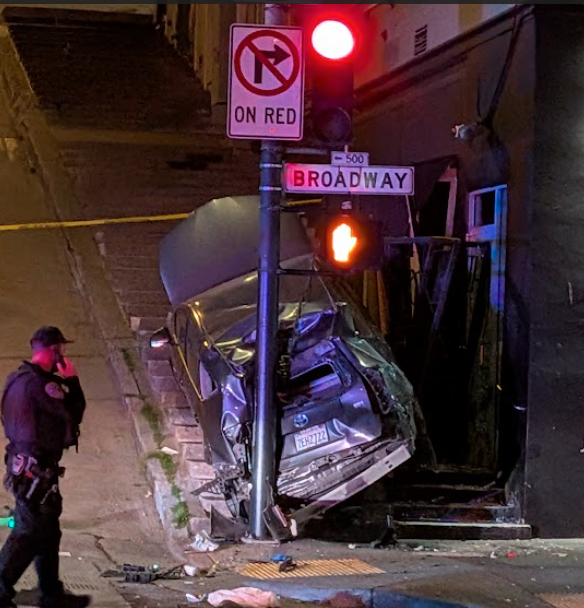
Motorist Careens onto North Beach Sidewalk, Killing Pedestrian
Driver kills pedestrian at another location where a safety project festered
The post Motorist Careens onto North Beach Sidewalk, Killing Pedestrian appeared first on Streetsblog San Francisco.