House Approves Transpo Spending Bill After Stripping Out $ for Livability

 Congressmen Oberstar and Blumenauer, here speaking together at the 2007 Bike Summit, were on opposite sides of a dispute about increased funding for livability programs yesterday. Photo: Bike Portland
The House of Representatives passed its 2011 appropriations bill for Transportation and Housing and Urban Development yesterday, significantly increasing the amount going to both highways and transit while decreasing spending overall. A fight over $200 million in funds for the Obama Administration’s new livability initiatives, however, showed that substantive changes in federal transportation policy will remain difficult to achieve until Congress tackles the long-term transportation reauthorization bill.
First, a refresher on the difference between authorizations and appropriations. Roughly speaking, authorizations set policy while appropriations spend money based on those policies. Congress passes a transportation appropriations bill, like the House did yesterday, every year, while the transportation authorization is renewed less frequently. The most recent authorization, SAFETEA-LU, passed in 2005 and was set to expire in 2009. It has been temporarily extended since then while Congress dithers over a new bill.
According to The Hill, the House’s $67.4 billion appropriations bill reduces spending overall by $500 million from last year, and is $1.3 billion less than what the Obama administration requested. Because major priorities are mainly set in the federal transportation bill, the appropriations bill rarely includes large shifts in policy.
On the biggest ticket transportation items, spending increased in this appropriation. The $45.2 billion set for highways is $4.1 billion more than last year’s bill provided for, according to The Hill, and $3.9 billion more than the administration asked for. Similarly the $11.3 billion in transit spending would be $500 million more than last year and $575 million more than requested.
One squabble that broke out pitted some of Congress’s
most prominent proponents of sustainable transportation against each other and ended with $200 million less for
livability initiatives — money that would have been used to help states coordinate transportation, land use, and conservation policy. That funding was proposed by Transportation
Secretary Ray LaHood and Portland Congressman Earl Blumenauer. Fighting
fiercely against it were Congressmen Peter DeFazio and James Oberstar.
As chronicled by the League of American Bicyclists’ Andy Clarke, this wasn’t a fight about substance — all four have been champions for livability, overall — but about process and turf.
Oberstar
chairs the House Committee on Transportation and Infrastructure, while
DeFazio chairs its Highways and Transit Subcommittee. That makes them
authorizers, in charge of writing policy. While the line between
authorizing and appropriating can be fuzzy, DeFazio and
Oberstar don’t want federal transportation policy to be written through
the appropriations process, so they were willing to kill the livability
funding, even if they may have supported it on the merits, in order to prevent a
precedent from being set.
DeFazio’s amendment to strip the
$200 million from the appropriations bill passed, suggesting that even
relatively inexpensive changes to federal transportation policy will
have to wait for the next reauthorization bill.
Other attempts to change established policy by slashing funding were denied.
Congressman Paul Broun, a Georgia Republican, unsuccessfully tried to
forbid any funding at all to go to bike paths, according to Clarke. An amendment from GOP rep Michelle Bachmann to eliminate Amtrak also went nowhere.
Four junior Democrats, Gary Peters, Jim Himes, Peter Welch, and John Adler, prepared an amendment to cut the bill by over $1 billion — including a chunk of funding for high-speed rail — but ultimately did not put it forward after a sustained push by the House leadership made its passage unlikely, according to Politico. A similar set of spending cuts proposed by Iowa Republican Tom Latham failed by 30 votes.

Read More:
Streetsblog has migrated to a new comment system. New commenters can register directly in the comments section of any article. Returning commenters: your previous comments and display name have been preserved, but you'll need to reclaim your account by clicking "Forgot your password?" on the sign-in form, entering your email, and following the verification link to set a new password — this is required because passwords could not be carried over during the migration. For questions, contact tips@streetsblog.org.
More from Streetsblog USA
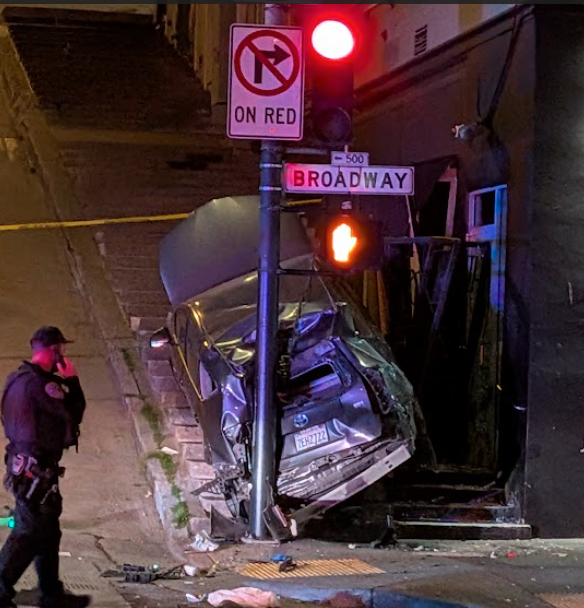
Motorist Careens onto North Beach Sidewalk, Killing Pedestrian
Driver kills pedestrian at another location where a safety project festered
The post Motorist Careens onto North Beach Sidewalk, Killing Pedestrian appeared first on Streetsblog San Francisco.