Why Isn't Traffic Reduction a Top Public Health Concern?

Earlier this week, Ken Archer at Greater Greater Washington posted this revealing graphic showing the relationship between the amount of driving we do in the United States and the death toll on our roads. Even as conventional traffic safety techniques have made driving less deadly, the rise in miles driven knocked back those improvements. It wasn’t until our collective mileage flattened out that safety gains could be fully realized. Thousands of lives were saved when the growth in driving came to a halt.
So it should seem obvious that policy discussions of the risk posed by traffic should prioritize measures to reduce driving and encourage travel by other means, but, as Archer notes, public health authorities tend not to attack the problem that way:
Traffic is the leading cause of death among children worldwide and the leading cause
of death among 1-34 year olds in the United States. So, why isn’t
traffic considered the top threat to public health by the CDC, WHO and
federal, state and local governments?Why
don’t officials approach traffic reduction with the same urgency that
they approach, say, tobacco or malnutrition? The answer can be found in
the CDC’s publications on injury prevention…
The CDC, NIH and other agencies focus on traffic safety as the preventable cause of death, not traffic itself. WHO’s recommendations for addressing traffic fatalities are “speed, alcohol, seat-belts and child restraints, helmets, and visibility.”
[Editor’s note: The WHO and CDC have also issued reports recommending traffic reduction strategies.] The flaw in this exclusive focus on traffic safety is that increased
safety only matters when vehicle miles traveled (VMT) are kept static
or reduced. Instead, safety improvements that reduce fatalities per VMT
have been offset by rising VMT…Are we serious about public health? The sooner we start demanding
honesty about the causes of the top killer of children here and abroad
the better, because during the 2 minutes you spent reading this
article, another child died in a traffic collision.
One agency that has focused attention on traffic as a public safety threat, Archer notes, is the New York City Department of Health, which recently released a report indicating that the city’s robust transit system is a big reason why traffic-related child deaths are relatively low — one-third the national average.
Elsewhere on the Network: Cap’n Transit on transit funding kludges. (What’s a kludge? You’ll just have to follow the link.) M-Bike notes another milestone for Michigan’s complete streets bill. And Straight Outta Suburbia critiques Los Angeles’s minimum parking requirements.

Read More:
Streetsblog has migrated to a new comment system. New commenters can register directly in the comments section of any article. Returning commenters: your previous comments and display name have been preserved, but you'll need to reclaim your account by clicking "Forgot your password?" on the sign-in form, entering your email, and following the verification link to set a new password — this is required because passwords could not be carried over during the migration. For questions, contact tips@streetsblog.org.
More from Streetsblog USA
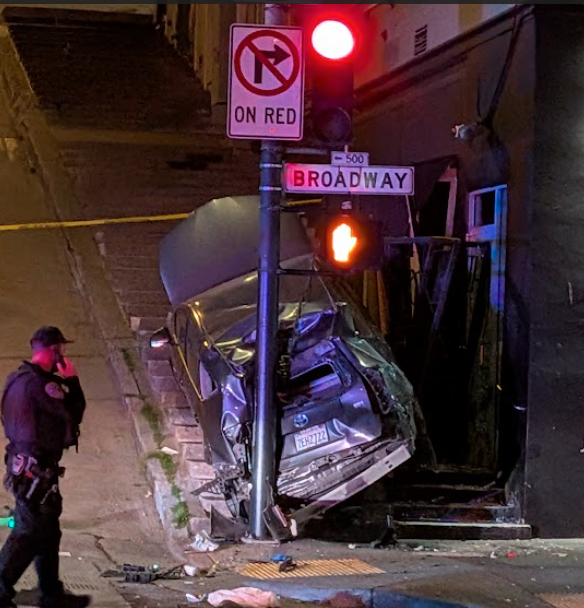
Motorist Careens onto North Beach Sidewalk, Killing Pedestrian
Driver kills pedestrian at another location where a safety project festered
The post Motorist Careens onto North Beach Sidewalk, Killing Pedestrian appeared first on Streetsblog San Francisco.