Senators Aim to Reintroduce Transportation Into Climate Bill Debate

 Sen. Jeff Merkley projects that his legislation would allow the United States to almost completely stop importing oil, primarily by reforming our transportation system. Image: Office of Sen. Merkley [PDF].
As the threat of a Republican filibuster continues to prevent the Senate from passing climate legislation, leading Democrats have tried to scale back their proposal in an attempt to peel off a few votes. In the process, serious attempts to put a price on carbon have fallen by the wayside, taking with them the best hope of reducing transportation emissions. A new bill introduced yesterday by Oregon Senator Jeff Merkley, however, aims to reintroduce transportation into the energy debate, if in a more limited form.
The Oil Independence Bill for a Stronger America, co-sponsored by Colorado’s Michael Bennet, Delaware’s Tom Carper, and New Mexico’s Tom Udall, sets an ambitious goal: completely halting imports of oil by 2030. Since transportation accounts for a full 70 percent of our oil use, that requires changing how the nation moves around.
Based on principles laid out last month, Merkley’s bill has four main components. First, it looks to improve the fuel efficiency of the transportation system we currently have. That means providing incentives for buying electric vehicles and charging infrastructure and setting ambitious new fuel efficiency standards for all vehicles.
Second, the Oil Independence Act would try to rebalance our transportation system away from reliance on the automobile. The bill includes Carper’s proposed CLEAN TEA program, which would require state Departments of Transportation and metropolitan planning organizations to set goals for how to reduce greenhouse gas emissions and establishes a competitive grant program to fund exemplary projects.
Because Republicans are expected to filibuster a cap-and-trade system that includes transportation, however, the revenues that system would generate aren’t available to fund CLEAN TEA. Merkley’s bill only authorizes the spending for the grant program; it doesn’t actually allocate the funding, potentially leaving the program greatly weakened.
The bill would also make transit tax benefits equal to parking benefits, permanently index them to inflation, and help shift freight movement onto trains and ships.
Third, the legislation offers support for the development of non-oil-based fuels, whether a next generation of biofuels or natural gas.
Finally, Merkley’s bill would try to lower home heating oil use by helping to provide financing for energy-efficient home retrofits.
Merkley’s legislation isn’t expected to move forward as a stand-alone bill. “It’s very much a marker for broader energy legislation,” explained Stephanie Potts, a policy associate with Smart Growth America. As the Senate Democrats try and put forward a reworked energy bill, she explained, Merkley’s bill provides a way of airing new ideas and measuring their support.
Because transportation accounts for a full third of American greenhouse gas emissions, serious climate legislation needs to tackle it in some way. Even so, said Potts, “it seems pretty certain that transportation fuels won’t be in an overall comprehensive cap at this point.” If any sort of cap-and-trade scheme is included at all, she said, it will only cover utilities.
The Oil Independence Act, said Potts, includes policies that could significantly reduce the environmental impact of the transportation sector even in the absence of a price signal. Merkley’s office estimates that the bill could save 8.32 million barrels of oil each day by 2030, or 96 percent of our total imports.
Whether the Senate leadership embraces these policies will become clear very soon. An energy and climate bill is likely to be released on the week of July 26, according to Potts.

Read More:
Streetsblog has migrated to a new comment system. New commenters can register directly in the comments section of any article. Returning commenters: your previous comments and display name have been preserved, but you'll need to reclaim your account by clicking "Forgot your password?" on the sign-in form, entering your email, and following the verification link to set a new password — this is required because passwords could not be carried over during the migration. For questions, contact tips@streetsblog.org.
More from Streetsblog USA
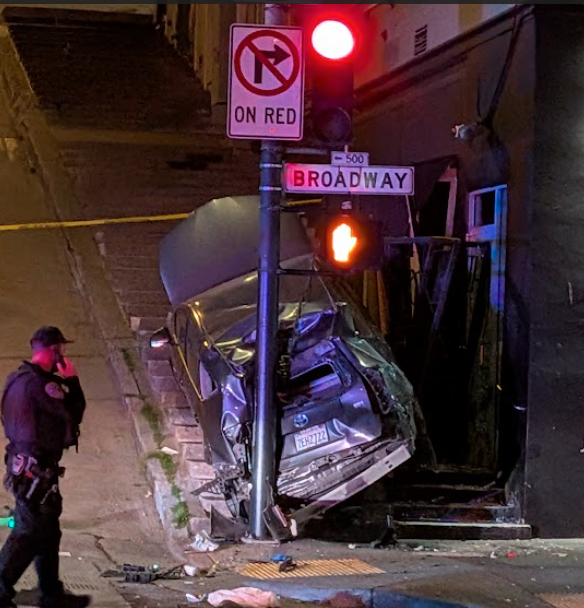
Motorist Careens onto North Beach Sidewalk, Killing Pedestrian
Driver kills pedestrian at another location where a safety project festered
The post Motorist Careens onto North Beach Sidewalk, Killing Pedestrian appeared first on Streetsblog San Francisco.