Car-Dependent States Hit Hardest by Obesity Epidemic

 States where more people drive to work face an even worse obesity crisis. Graphic: Noah Kazis and Carly Clark
Transportation is a public health issue. As profiled in the recently released report from the Trust for America’s Health, “F as in Fat,” obesity rates continue to rise across the nation, increasing the risk of serious health problems like diabetes and hypertension. To solve the obesity epidemic, the data suggest, we need to rethink our dependence on the automobile.
“F as in Fat” breaks out obesity numbers state by state. After glancing at their map, it seemed like transit and pedestrian-friendly states were doing better than the national average. To get more precise, we decided to compare adult obesity rates, as gathered in the report, to commuting statistics in the U.S. Census. You can download our spreadsheet here.
The result is the scatterplot shown above, which clearly shows that states where more people drive to work have higher obesity rates. Caveats abound — correlation isn’t causation and state-level data can obscure important patterns visible only through a closer microscope — but the result is provocative. The two outliers are D.C. and New York State; they imply that while a large shift away from driving can make a big difference, it can’t solve the obesity crisis on its own.
Although “F as in Fat” doesn’t analyze transportation behavior itself, the authors agree that moving away from a reliance on the automobile is a critical component in curbing obesity. Their recommendations include: passing legislation supporting non-motorized transportation, such as an expansion of the Safe Routes to School program or a national complete streets bill; building more safe pedestrian space and bike paths to encourage active transport; and supporting mixed-use, walkable, and transit-oriented development.

Read More:
Streetsblog has migrated to a new comment system. New commenters can register directly in the comments section of any article. Returning commenters: your previous comments and display name have been preserved, but you'll need to reclaim your account by clicking "Forgot your password?" on the sign-in form, entering your email, and following the verification link to set a new password — this is required because passwords could not be carried over during the migration. For questions, contact tips@streetsblog.org.
More from Streetsblog USA
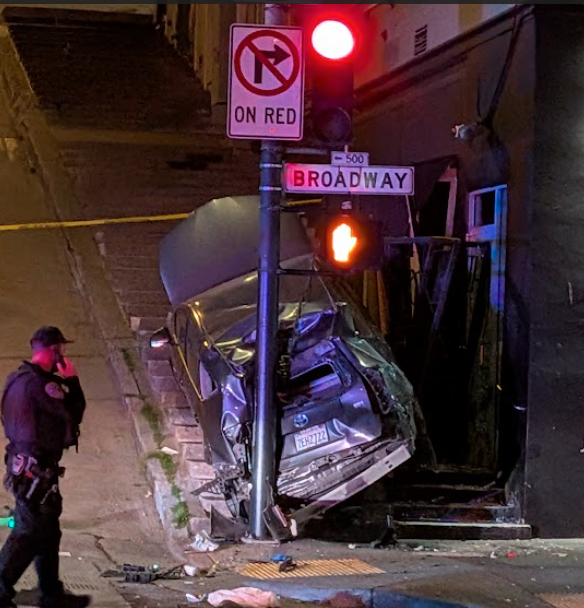
Motorist Careens onto North Beach Sidewalk, Killing Pedestrian
Driver kills pedestrian at another location where a safety project festered
The post Motorist Careens onto North Beach Sidewalk, Killing Pedestrian appeared first on Streetsblog San Francisco.