How Is a Parking Space Different From a Toilet?
 Don’t plan for parking spaces the way you plan for these. (Photo: Admit One via Flickr)
Here’s
the analogy of the day from the Streetsblog Network: Parking spaces are
like toilets — at least for conventional planners.
That line comes from Reinventing Urban Transport, and while it’s good for a laugh, it yields several important insights on closer examination.
Paul
Barter, the blog’s author, has been thinking about the parallels
between parking spaces and toilets for several months now. Here are
some of the similarities that he notes:
- Both are treated as an essential ancillary service that every building will need.
- It
is usually assumed that no fee (or a token fee at most perhaps) will be
charged. Remember, we are talking about the conventional approach to
parking policy here. Some jurisdictions even ban fees for such
facilities. - There is thus little direct return
on the investments. So the private sector would under-provide them
unless forced to. To the rescue come regulations in the form of parking
or toilet requirements in planning or building codes.
But
as Barter goes on to argue, planning for parking the way you do for
toilets is a fundamentally flawed approach. Here’s how he starts
breaking it down:
-
It is much more difficult to predict parking demand than to predict
toilet demand (which itself is not easy). The human need to expel waste
changes little (except when beer is consumed in large quantities
perhaps). The demand for parking can change enormously over time as car
ownership changes and as mode choices shift. - Everyone needs toilets. Only car users need parking. (But conventional parking policy assumes that ‘car users’ = ‘everyone’.)
- Parking
takes a lot more space than toilets. Forgive me for stating the obvious
here. It is common for American suburban office parks to be required to
have as much parking space as they have floor space for other uses.
Buildings in Kuala Lumpur…or Bangkok often have a third or more of
their floors devoted to parking. Parking standards often dramatically
limit the density that is feasible on a site.
There’s
a lot more to his original post, and Barter is looking for more
insights to help develop the idea — which he finds has been quite
useful in presentations. Head on over to his site and offer your feedback.
More from around the network: The Bicycle Coalition of Greater Philadelphia reports that the installation of 1,500 bike parking rings on old meter posts has begun. This is a stimulus-funded project. Bike Denton has the story on a $15 million grant for bike lanes in Austin, Texas. And The Transport Politic asks, whose turn is it to lead transport planning?

Read More:
Streetsblog has migrated to a new comment system. New commenters can register directly in the comments section of any article. Returning commenters: your previous comments and display name have been preserved, but you'll need to reclaim your account by clicking "Forgot your password?" on the sign-in form, entering your email, and following the verification link to set a new password — this is required because passwords could not be carried over during the migration. For questions, contact tips@streetsblog.org.
More from Streetsblog USA
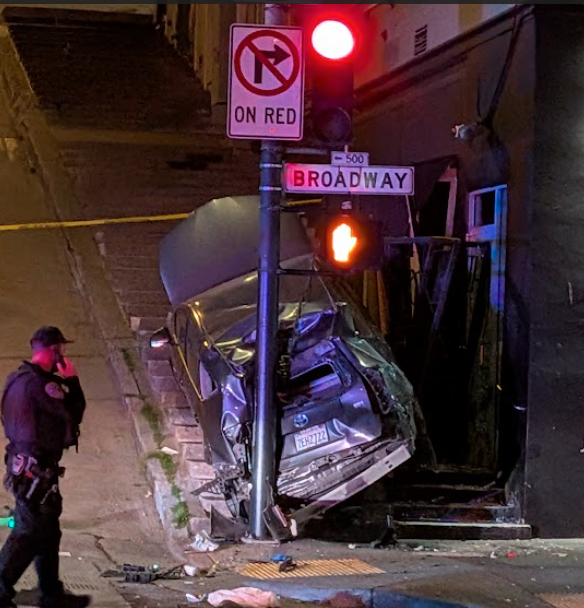
Motorist Careens onto North Beach Sidewalk, Killing Pedestrian
Driver kills pedestrian at another location where a safety project festered
The post Motorist Careens onto North Beach Sidewalk, Killing Pedestrian appeared first on Streetsblog San Francisco.