Chicago’s New BRT Push Will Be Linked to “Livability”
 Bogotá’s Transmilenio BRT. Could Chicago get something like this? (Photo: the mikebot via Flickr)
Today on the Streetsblog Network, we hear about new plans for Bus Rapid Transit from the blog of the Metropolitan Planning Council (the MPC is “an independent, nonprofit, nonpartisan organization…[that] serves communities and residents by developing, promoting and implementing solutions for sound regional growth”).
A few years back, Chicago had a chance to develop pilot BRT routes, but missed some key funding deadlines. The project was abandoned, but is being taken up again now — with some interesting new angles prompted by federal policy changes. The MPC blog reports:
Fast-forward to a few months ago, when the Federal Transit Administration (FTA) announced a $280 million program to fund streetcar and BRT proposals. This encouraging news has led to the revival of the CTA’s BRT plan but with a twist: projects must not only be shovel-ready, they also must demonstrate the relationship to the six livability principles outlined by the federal government. These livability principles ask transit agencies to consider the effects of the service on the surrounding areas, its ability to improve access to jobs and housing, and the potential to reduce environmental impacts in local communities.
MPC has been working with the Chicago Dept. of Transportation (CDOT) and CTA on a BRT Evaluation Study to analyze potential BRT routes throughout the city, based on characteristics outlined by the livability principles. While current ridership is an important factor being considered, the study also analyzes potential connections to existing CTA rail and Metra services, impacts of providing transit options in underserved areas, and connections to employment centers and other destinations.
More from around the network: Utility Cycling has part one of an analysis of what’s right and wrong with Google’s bike-there function. Cyclelicious has the story of an 87-year-old woman who is still biking for transportation, 74 years after she got her first bike. And Transit Miami has some pictures of what that city’s traffic looks like when it’s moving about 6 mph.

Read More:
Streetsblog has migrated to a new comment system. New commenters can register directly in the comments section of any article. Returning commenters: your previous comments and display name have been preserved, but you'll need to reclaim your account by clicking "Forgot your password?" on the sign-in form, entering your email, and following the verification link to set a new password — this is required because passwords could not be carried over during the migration. For questions, contact tips@streetsblog.org.
More from Streetsblog USA
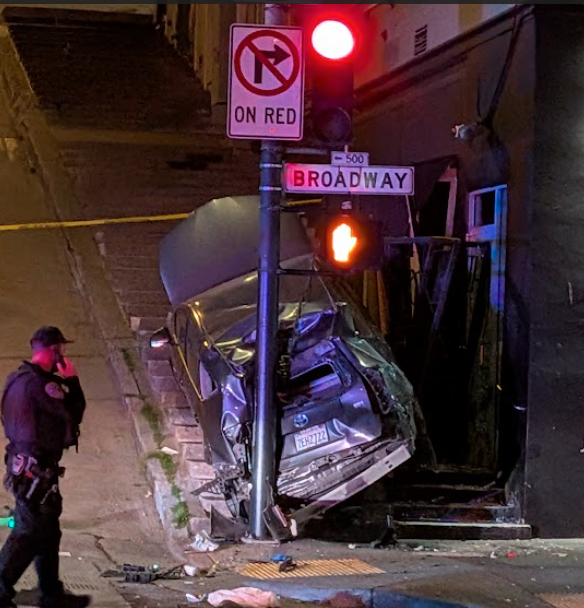
Motorist Careens onto North Beach Sidewalk, Killing Pedestrian
Driver kills pedestrian at another location where a safety project festered
The post Motorist Careens onto North Beach Sidewalk, Killing Pedestrian appeared first on Streetsblog San Francisco.