

Could a New Kind of Fuel Tax Help Break the Senate Climate Deadlock?


Even before the Senate environment panel pushed through a GOP protest to approve its climate change bill, Sens. Lindsey Graham (R-SC), Joe Lieberman (I-CT), and John Kerry (D-MA) were working behind the scenes on a so-called “tripartisan” plan that can win enough votes in Congress’ upper chamber to make nationwide emissions cuts a reality.
 (from left) Sens. Lindsey Graham (R-SC), Joe Lieberman (I-CT), and John Kerry (D-MA) (Photo: Getty Images)
Over the weekend, the first hints of the trio’s potential strategy were revealed to The Washington Post — and new pricing for transportation fuel could play a major role (emphasis mine):
According to several sources familiar with the process, the lawmakers
are looking at cutting the nation’s greenhouse gas output by targeting,
in separate ways, three major sources of emissions: electric utilities,
transportation and industry.Power plants would face an overall cap on emissions that would
become more stringent over time; motor fuel may be subject to a carbon
tax whose proceeds could help electrify the U.S. transportation sector;
and industrial facilities would be exempted from a cap on emissions for
several years before it is phased in.
The concept of an across-the-board tax on fossil fuels used for transport is not new. Exxon CEO Rex Tillerson backed it in October, aligning his company with the stance of some environmental groups and causing debate over his motivations.
But Tillerson’s endorsement proposed rebating a carbon tax back to consumers rather than letting it “becom[e] a revenue stream for other purposes,” making it far from clear whether the three senators could win support for giving more new money to electrified transportation. (By way of context, electric cars received more funding in the first six months of the Obama administration than the Federal Transit Administration’s annual budget.)
Physicist Joseph Romm, who blogs on every twist of the climate debate for the Center for American Progress, described the Post story as a “trial balloon” for the senators’ plan and warned that the end of the cap-and-trade concept would hardly silence critics who are working to re-brand emissions caps as a closet “gas tax”:
My sources say that what they’re proposing isn’t actually a carbon
tax on gasoline, nor is it the original cap-and-trade proposal, but
something in between. Since the notion is complex and confusing — and
no final decisions have been made — I won’t try to explain it fully
here. …While some oil companies may support this approach, my guess/fear is
ExxonMobil/API will simply attack the new bill as a gasoline tax —
indeed, that may be their plan.
As Romm points out, the devil is in the details: How would a new fuel tax be structured? Given how many lawmakers acknowledge (if reluctantly) that the existing gas tax is the most practice way to pay for a comprehensive new federal transportation bill, imposing a new motor fuel fee could hurt the three senators’ chances with their infrastructure-minded colleagues.
Putting aside the possible merits or drawbacks of Kerry, Lieberman, and Graham’s approach, the Post story reveals a political climate that may be ever-so-slightly shifting in favor of passage of a climate bill this year. Senate Majority Leader Harry Reid (D-NV) reportedly told Kerry last week to intensify work on the “tripartisan” deal in hopes of bringing legislation to a vote before the November midterm elections.

Read More:
Support Streetsblog
More from Streetsblog USA
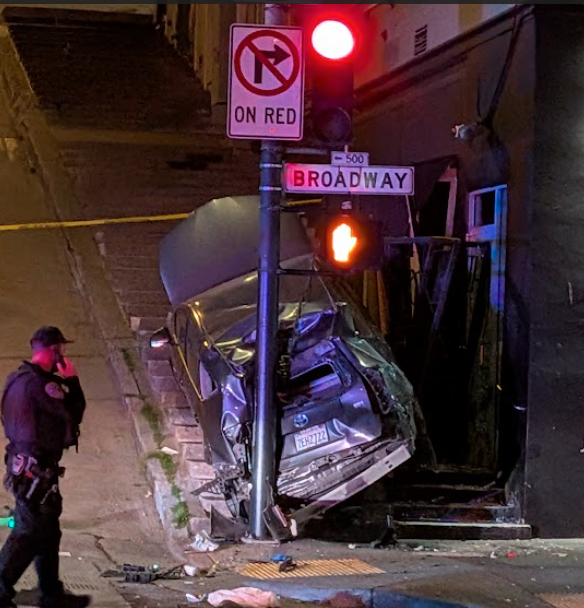
Motorist Careens onto North Beach Sidewalk, Killing Pedestrian
Driver kills pedestrian at another location where a safety project festered
The post Motorist Careens onto North Beach Sidewalk, Killing Pedestrian appeared first on Streetsblog San Francisco.




Comments Are Temporarily Disabled
Streetsblog is in the process of migrating our commenting system. During this transition, commenting is temporarily unavailable.
Once the migration is complete, you will be able to log back in and will have full access to your comment history. We appreciate your patience and look forward to having you back in the conversation soon.