U.S. DOT Offers Sample Distracted Driving Bill — With a Potential Loophole

The Obama administration today offered a one-page sample proposal to crack down on texting behind the wheel, aimed at helping guide states through the process of crafting their own distracted driving legislation.
 (Photo: brainlink.org)
The sample bill text [PDF] was prepared by the U.S. DOT’s National Highway Traffic Safety Administration, which invited road safety groups to join auto industry representatives, the AAA, and officials from state DOTs to help craft consensus language.
Transportation Secretary Ray LaHood called the legislation in a statement “another powerful tool in our arsenal to help
the states combat this serious threat” of texting while driving in a statement that accompanied the sample text — which carves out an exemption from any fines or penalties for drivers who (emphasis mine):
Receiv[e] messages related to the operation or navigation of a motor vehicle; safety-related information including emergency, traffic, or weather alerts; data used primarily by the motor vehicle; or radio.
States that adopt the Obama administration’s sample language, then, would allow drivers to continue getting traffic tweets and texts from their local DOTs, a practice dubbed “mixed messages” by the Associated Press in a September investigation.
“It’s not a perfect bill, but it was something that everybody in the group felt they could put their name on it and say, ‘this is a good start,'” Judith Lee Stone, president of Advocates for Highway and Auto Safety, said in an interview, adding that the exemption for drivers getting traffic and weather alerts “may have just slipped by us.”
If the Advocates were to write their own version of sample distracted driving legislation, Stone said, “we probably wouldn’t include” the exemption. But she noted that the group has no plans to draft its own language for states working on texting bans.
The U.S. DOT noted in its release today that the sample bill “reflects current circumstances and state of knowledge, but may be revised in the future to incorporate new research findings, address evolving technologies, or to harmonize with other legislation.”
A research team from the University of Utah reported in December that reading incoming text messages had a more deleterious effect on drivers’ braking response times than writing texts.

Streetsblog has migrated to a new comment system. New commenters can register directly in the comments section of any article. Returning commenters: your previous comments and display name have been preserved, but you'll need to reclaim your account by clicking "Forgot your password?" on the sign-in form, entering your email, and following the verification link to set a new password — this is required because passwords could not be carried over during the migration. For questions, contact tips@streetsblog.org.
More from Streetsblog USA
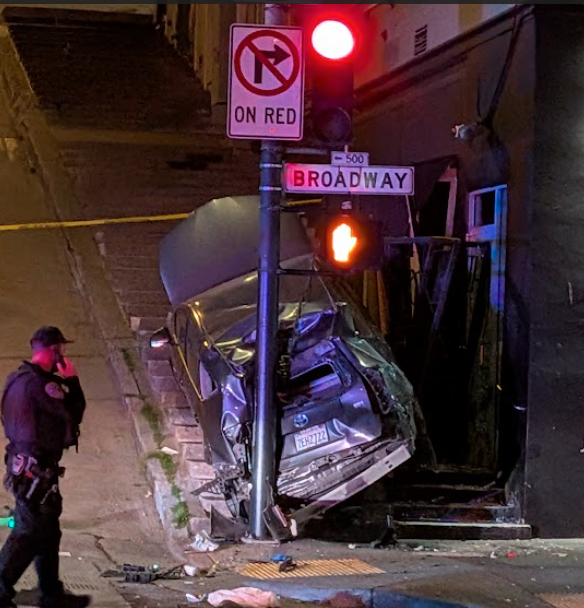
Motorist Careens onto North Beach Sidewalk, Killing Pedestrian
Driver kills pedestrian at another location where a safety project festered
The post Motorist Careens onto North Beach Sidewalk, Killing Pedestrian appeared first on Streetsblog San Francisco.