The ‘Infrastructure Condo’ That Could Help Make High-Speed Rail Happen

As the Obama administration prepares to roll out its ambitious new investment in high-speed rail (HSR), right-of-way — primary control over a stretch of train track, whether existing or envisioned — has become a major consideration for states that want to jumpstart local networks.
 (Image: CA HSR Authority)
In California, freight railroad Union Pacific is negotiating with HSR planners over sharing right-of-way. In upstate New York, planners concede that proposed HSR trains may not reach Niagara Falls because of the hard bargain getting driven by CSX, the freight company that controls right-of-way.
So how can the White House’s HSR plan avoid miring in local right-of-way struggles?
Urban studies professor and transportation expert Anthony Perl outlined his proposed solution today at the U.S. High Speed Rail Association conference. Perl’s answer to the right-of-way conundrum: the “infrastructure condominium.”
Perl’s term may not roll off the tongue, but his concept is simple. Instead of freight railroads engaging in high-stakes dealmaking for rights-of-way, HSR planners would lease the rights to the track.
“Freight railroads can collect ‘rent’
for their rights-of-way,” Perl explained today, “and can get involved in the operation end [of HSR] if they’re
interested. All they have to do is sign the right documents … and they’ll
get a check every month.”
Perl, director of the urban studies program at Simon Fraser University, explains the concept further in his book Transport Revolutions:
In a railway infrastructure condominium, the right-of-way would be owned separately from the tracks, communications and signalling systems and electric power distribution equipment. … The tracks occupying a railway condominium could remain quite segregated operationally, or some could be integrated into a common network. Rents could be paid to a ground-lease holder, which in many cases would be a private railway company that had previously owned the integrated tracks, signals, and right-of-way. These rents could be used to finance electrification of America’s freight rail network, which could remain in private hands.
Perl acknowledged that his “infrastructure condo” would not solve all the difficulties facing the U.S. government’s HSR buildout, and that the freight industry “would fight such an idea” given that their existing rail infrastructure stands to receive a major upgrade as part of the U.S. DOT’s first round of HSR grants.
Still, with conservative critics predicting that the need to accommodate existing track ownership could turn into a “subsidy” for freight railroads, the prospect of reining in the freight industry’s bargaining power — while providing it a guaranteed source of revenue for rights-of-way — could catch on in Washington.

Streetsblog has migrated to a new comment system. New commenters can register directly in the comments section of any article. Returning commenters: your previous comments and display name have been preserved, but you'll need to reclaim your account by clicking "Forgot your password?" on the sign-in form, entering your email, and following the verification link to set a new password — this is required because passwords could not be carried over during the migration. For questions, contact tips@streetsblog.org.
More from Streetsblog USA
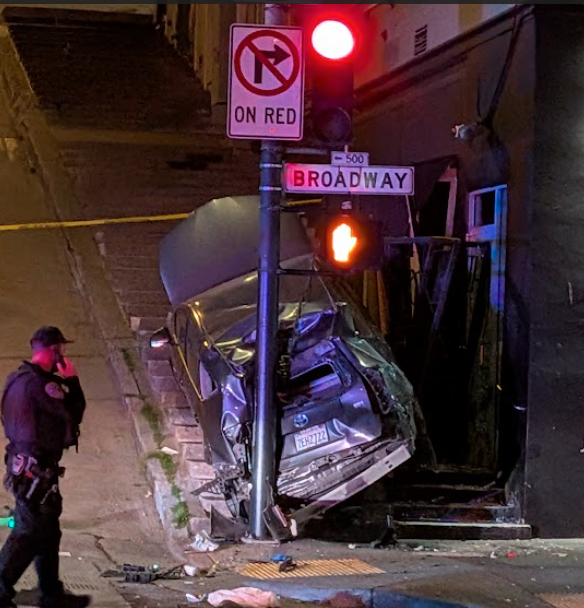
Motorist Careens onto North Beach Sidewalk, Killing Pedestrian
Driver kills pedestrian at another location where a safety project festered
The post Motorist Careens onto North Beach Sidewalk, Killing Pedestrian appeared first on Streetsblog San Francisco.