

The ‘Elitism’ Trap Migrates From Transport Reform to Climate Change


Transportation debates have a terminology all their own, whether arcane (“multi-modal”), hard to define (“subsidies”), or outright misleading — as is the case with “elitism,” the standard line that road-building acolytes often apply to those who suggest that the government focus more on expanding transit and other forms of clean transport.
 Climate bill coauthors: Reps. Henry Waxman of California and Ed Markey of Massachusetts. (Photo: Wash Indy)
Now that the issue of climate change has come to the fore again in Washington, however, the E-word is breaking out all over. The Senate and House climate bills devote a disproportionately little attention to transportation reform, but the GOP strategy for undermining them seems to be all about stereotyping climate advocates as urbanized elitists.
Sen. Kit Bond (R-MO) did it this afternoon at a press event slamming the Senate climate legislation:
It’s hard to believe that Kerry-Boxer is worse than the other California-Massachusetts bill, the Waxman-Markey bill. … I am most concerned that this job will kill manufacturing and
coal-dependent jobs in the Midwest, South and Great Plains.
And a spokesman for Sen. Lisa Murkowski used the same rhetorical devise in an interview with Roll Call:
“The
climate change debate is being driven by California and Massachusetts,”
Murkowski spokesman Rob Dylan said. “People forget what life is in the
middle of the country, and I think that’s what we’re trying to talk
about.”
The conservative National Review has also taken the cue on the California-Massachusetts dis.
It’s no surprise that opponents of congressional action on climate change are trotting out the elitism trope, but it is a distressing sign that the nation’s cities, long under-represented in policy debates despite their powerful legislators, are about to become pawns in two culture wars at once.
California and Massachusetts are not just transit-rich, they’re also the nation’s No. 1 and No. 15 most-populated states. In a Congress increasingly dominated by rural-state lawmakers, it’s not such a bad thing to see Californians and Massachusettsans being spoken for on the climate question.

Read More:

Support Streetsblog
More from Streetsblog USA
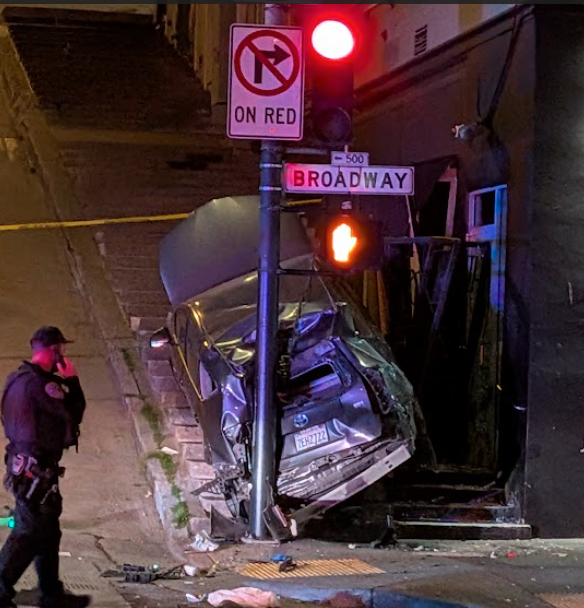
Motorist Careens onto North Beach Sidewalk, Killing Pedestrian
Driver kills pedestrian at another location where a safety project festered
The post Motorist Careens onto North Beach Sidewalk, Killing Pedestrian appeared first on Streetsblog San Francisco.






Comments Are Temporarily Disabled
Streetsblog is in the process of migrating our commenting system. During this transition, commenting is temporarily unavailable.
Once the migration is complete, you will be able to log back in and will have full access to your comment history. We appreciate your patience and look forward to having you back in the conversation soon.