

New Report: Feds Subsidizing Parking Six Times as Much as Transit


 (Image: Subsidyscope)
“Subsidy” is a word used quite often in transportation policy-making circles, whether by road acolytes who claim (falsely) that highways are not federally subsidized because of the gas tax or by transit boosters who lament Washington’s unceasing focus on paying for more local asphalt.
But the subsidy debate often overlooks the government tax exemption for workers’ parking expenses. And federal parking subsidies are skyrocketing, as Subsidyscope revealed yesterday in its data-packed report on U.S. transport spending: the value of tax-free parking will reach $3 billion this year, compared with $500 million in subsidies for transit use.
The imbalance might be corrected if the government had always treated parking and transit equally when it came to tax benefits. Until Sen. Charles Schumer (D-NY) added a provision to this year’s economic stimulus law that set a monthly maximum of $230 for both transit and parking benefits, workers could write off a maximum of slightly more than $200 in parking, while the maximum tax-free value of transit passes was about $100 less.
Subsidyscope, a joint project of the Pew Charitable Trusts and the Sunlight Foundation , pored over federal records to produce a searchable database of transportation spending dating back to the year 2000. Their researchers’ conclusions found that highways received $30 billion in federal support last year — more than three times as much as transit, which got $9 billion.
How much of that $30 billion was a subsidy? It’s tough to say, according to Subsidyscope, since state DOTs are not required to report the details of how federal road aid is distributed. Still, the overwhelming majority of federal transport programs contain subsidies (see the chart after the jump for more details).
A more classic example of federal subsidy is programs that transfer the risk of new projects onto the federal government. The Transportation Infrastructure Finance and Innovation Act (TIFIA), which offers loans to states and localities at a low interest rate, is the transport sector’s major source of credit subsidies from Washington — and the majority of TIFIA loans go to highway projects.
(ed. note. This post was updated from an earlier version that neglected to note Schumer’s addition to the economic stimulus law.)
 (Image: Subsidyscope)
Read More:
Support Streetsblog
More from Streetsblog USA
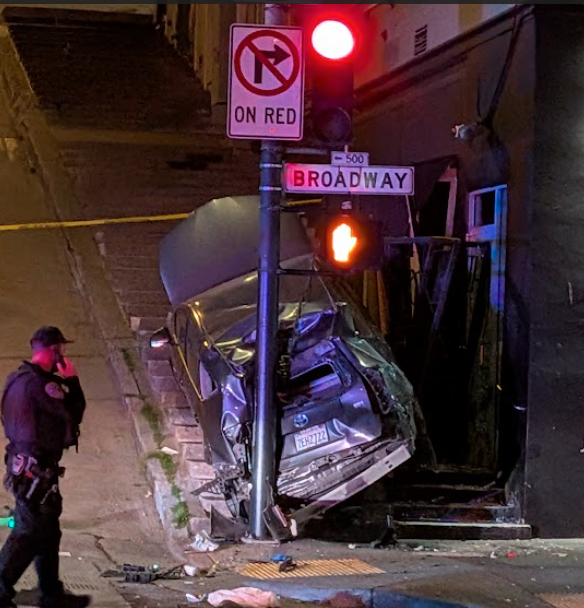
Motorist Careens onto North Beach Sidewalk, Killing Pedestrian
Driver kills pedestrian at another location where a safety project festered
The post Motorist Careens onto North Beach Sidewalk, Killing Pedestrian appeared first on Streetsblog San Francisco.






Comments Are Temporarily Disabled
Streetsblog is in the process of migrating our commenting system. During this transition, commenting is temporarily unavailable.
Once the migration is complete, you will be able to log back in and will have full access to your comment history. We appreciate your patience and look forward to having you back in the conversation soon.