The Social Costs of Car-free Living in Small Cities
What kind of a statement does car-free living make in a small city? Today on the Streetsblog Network, Aaron Renn at The Urbanophile poses that question in a provocative post. Sure, it’s about walking the walk of sustainable transportation, he says, but it also represents a withdrawal from the community structure in places such as Columbus and Cincinnati:
Photo by World of Oddy via Flickr.
In a metro area that is nearly all auto-oriented, much of the setting of civic life in that city is outside of the core downtown area and districts where it is easy to get to without a car. To live without a car is a deliberate cutting off of oneself from those activities and regions — especially suburban — and from that part of society.
I think it’s that last part that is important. Living carless is a deliberate rejection of the majority of the metro area, evidenced by actually enduring hardship by voluntarily depriving oneself of the means to travel there. I’m sure this message is not lost on the people who live in those places.
Sure, I get it that there are legitimate concerns about sprawl and other things. But I also hear these same urban advocates complain that suburbanites don’t care about the city, are afraid to visit downtown, won’t support urban core redevelopment, etc. If you are living carless in one of those cities, frankly, you have no leg to stand on in complaining about that. (I’ll make an exception for college students.)
Imagine how this looks to someone living in the suburbs. What do they see? They are asked to visit downtown and support downtown, but have to listen to urban advocates claim that the highest and best form of living is to be downtown without a car — a car that is necessary to visit the suburbs, and by extension them.
This brings to mind a recent post from Carfree With Kids about maintaining relationships with friends in the suburbs if you don’t have a car. It’s true that for all the ways in which car-free living can create and sustain a sense of community, it can also be a barrier to creating social — and political — ties in many places and circumstances. We’d be interested in hearing about your experiences and thoughts on the subject in the comments. But first head over to The Urbanophile and read the excellent post in full.
More from the network: The Transport Politic reports that Louisiana Governor Bobby Jindal, who previously flipped his position on high-speed rail, has now decided to flop. Travelin’ Local looks at the relative spatial efficiency of various transport modes. And Transit Miami laments the situation in that city Miami-Dade County, where the mayor has been handing out fat raises to his staff while cutting the budget for transit.

Read More:
Streetsblog has migrated to a new comment system. New commenters can register directly in the comments section of any article. Returning commenters: your previous comments and display name have been preserved, but you'll need to reclaim your account by clicking "Forgot your password?" on the sign-in form, entering your email, and following the verification link to set a new password — this is required because passwords could not be carried over during the migration. For questions, contact tips@streetsblog.org.
More from Streetsblog USA
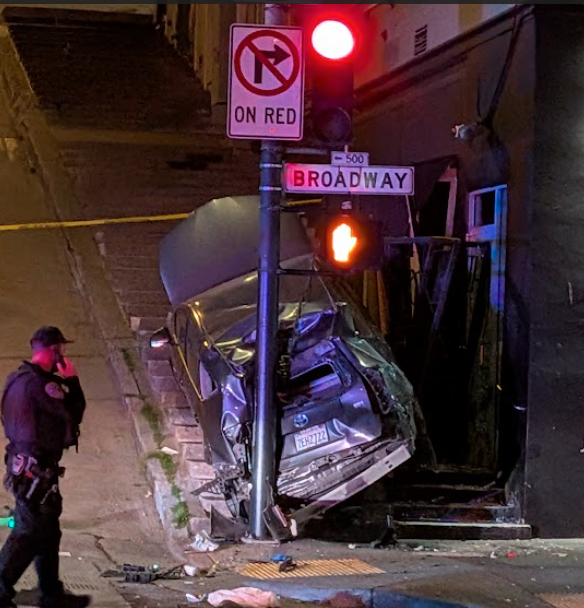
Motorist Careens onto North Beach Sidewalk, Killing Pedestrian
Driver kills pedestrian at another location where a safety project festered
The post Motorist Careens onto North Beach Sidewalk, Killing Pedestrian appeared first on Streetsblog San Francisco.