Report: Nation’s Cities Not Getting Their Share of Stimulus Transpo Money

The nation’s largest metropolitan areas — which account for 63 percent of the U.S. population and 73 percent of the gross domestic product (GDP) — have received less than half of the surface transportation money allocated so far underthe Obama administration’s economic stimulus plan, according to a new report compiled for the U.S. Conference of Mayors.
 Manny Diaz, outgoing president of the U.S. Conference of Mayors (Photo: usmayors via Flickr)
The transportation stimulus report was released over the weekend during the mayoral conference’s annual meeting, which lost high-profile attendees to a firefighters’ strike in the host city of Providence, Rhode Island.
Its data suggests that cities, while they remain economic engines and shoulder much of the environmental cost of congestion, are getting the short end of the stick from state DOTs that have control over a significant share of stimulus money.
The top 85 American metro areas have received $8.8 billion, or 48 percent, of the $18.6 billion in stimulus aid given to state DOTs by the Federal Highway Administration, according to the mayoral conference’s report.
The report found several cities that generate a large amount of economic activity for their states getting a comparatively small share of transportation aid. Los Angeles, for example, contributes 39 percent of California’s GDP but received 25 percent of its stimulus money. Indianapolis fared even worse, netting just 4 percent of Indiana’s transportation stimulus money while generating 39 percent of the state’s GDP.
Using congestion estimates from the Texas Transportation Institute’s (TTI) most recent Urban Mobility study, the mayoral conference’s report also found that urban areas have not received stimulus money to match their traffic burden.
New York City pays 9.4 percent of the nation’s congestion costs, according to the TTI, but has received 3.6 percent of the nation’s road-repair money. San Francisco’s congestion costs are 3.1 percent of the national total, but its share of FHWA stimulus aid was 0.4 percent.
Whether road-repair money should be distributed primarily on the basis of economic production or congestion remains open to debate. However, the mayoral conference concluded simply that state DOTs “should take into account” the economic production of cities in order to maximize the impact of the stimulus’ transportation dollars.
“To do so would prompt states and federal decision-makers to increase their funding commitments to the nation’s metro economies, raising the productivity level of their investments,” the report concluded.

Streetsblog has migrated to a new comment system. New commenters can register directly in the comments section of any article. Returning commenters: your previous comments and display name have been preserved, but you'll need to reclaim your account by clicking "Forgot your password?" on the sign-in form, entering your email, and following the verification link to set a new password — this is required because passwords could not be carried over during the migration. For questions, contact tips@streetsblog.org.
More from Streetsblog USA
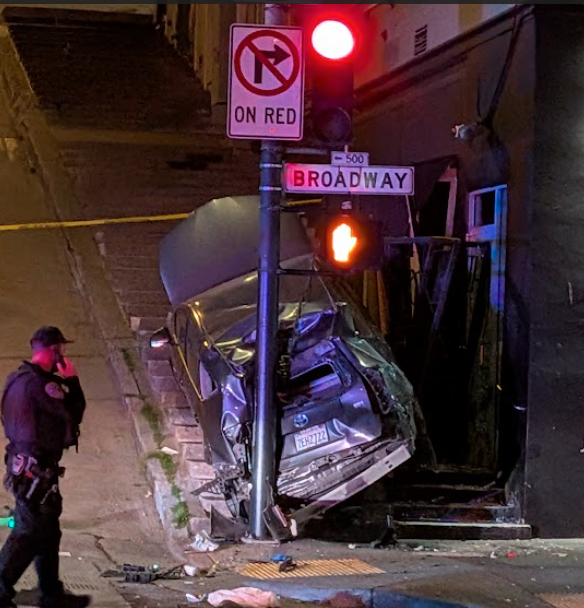
Motorist Careens onto North Beach Sidewalk, Killing Pedestrian
Driver kills pedestrian at another location where a safety project festered
The post Motorist Careens onto North Beach Sidewalk, Killing Pedestrian appeared first on Streetsblog San Francisco.