Sotomayor’s Eminent Domain Stance: What Does It Mean for Cities?

Supreme Court nominee Sonia Sotomayor is dominating the conversation in Washington as analysts begin to dig into her past rulings. And while she has yet to weigh in on abortion, the judge has spoken loud and clear on an issue of interest to livable streets advocates: eminent domain.
 Supreme Court nominee Sonia Sotomayor (Photo: Gothamist)
As a judge on the Second Circuit Court of Appeals, Sotomayor ruled against property owners in Didden v. Village of Port Chester, a case that centered on plans for a CVS drug store in Westchester County.
Lawyer and blogger Ilya Somin, who urged the Supreme Court to consider the Didden case, has a thorough — if undeniably subjective — summary of the case here. In an unsigned judgment, Sotomayor’s court ultimately allowed the Westchester developer to condemn the land belonging to plaintiff Didden and build a competing pharmacy, despite the questionable public-use benefit that would result from the taking.
During her confirmation hearing, Sotomayor is likely to get pointed questions on Didden from conservatives who were dismayed when the nation’s highest court ruled in favor of eminent domain rights in 2005’s Kelo v. New London. But should urbanites, and livable streets advocates in particular, also be concerned by the nominee’s stance on takings of private property?
In theory, eminent domain can and should be used for beneficial purposes, such as transit expansion. Yet a recent push along those lines was halted by the Colorado state legislature last year, and proposed curbs on eminent domain are also imperiling the future of light rail in the Houston area.
On the flip side, local governments often take private property for new development projects, claiming that commercial and office buildings justify a standard of “public use” — as was the case in Kelo and in Brooklyn’s Atlantic Yards case, which was turned away by the Supreme Court last year. Another eminent domain case heard by Sotomayor’s court, Brody v. Village of Port Chester, involved condemnation to build a Stop-‘n-Shop supermarket parking lot.
Sotomayor’s appeals court handed property owner William Brody a partial victory in 2005, ruling that his due process rights were violated but not requiring Port Chester to reverse the condemnation. In fact, the Brody opinion (available for download here) states that judges should not weigh in on the merits of taking land for “public use”:
[T]he role of the courts in enforcing the constitutional limitations on eminent domain is one of patrolling the borders. That which falls within the boundaries of acceptability is not subject to review.
What do Streetsblog readers think about the Didden and Brody cases, and the role of eminent domain in community development?

Streetsblog has migrated to a new comment system. New commenters can register directly in the comments section of any article. Returning commenters: your previous comments and display name have been preserved, but you'll need to reclaim your account by clicking "Forgot your password?" on the sign-in form, entering your email, and following the verification link to set a new password — this is required because passwords could not be carried over during the migration. For questions, contact tips@streetsblog.org.
More from Streetsblog USA
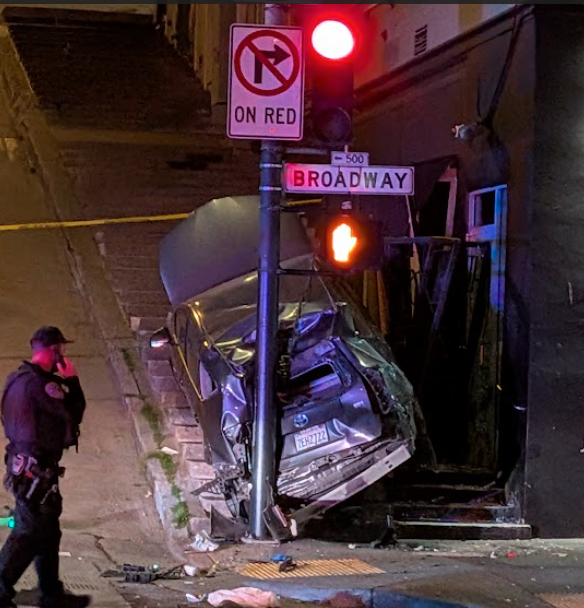
Motorist Careens onto North Beach Sidewalk, Killing Pedestrian
Driver kills pedestrian at another location where a safety project festered
The post Motorist Careens onto North Beach Sidewalk, Killing Pedestrian appeared first on Streetsblog San Francisco.