Stimulus Bill Is a Step Forward for Pedestrians, Cyclists & Cities

Within the $27.5 billion allocated for “highways” in the stimulus bill signed by President Obama yesterday,
there is some good news for pedestrians, cyclists and cities.
I spoke with Michelle Ernst, staff analyst at the Tri-State Transportation Campaign, to get a sense of how the new legislation compares to the 2005 federal transportation bill, known as SAFETEA-LU. Ernst points out that federal highway money flows through the Surface Transportation
Program, which is more flexible than the “highway” label lets on. Compared to SAFETEA-LU, the stimulus bill will nearly double the portion of “highway” funds going to bike and pedestrian projects while sending more money to cities.
Here are the changes Ernst spotted after crunching the numbers:
- Double the money to bike and pedestrian projects: Under SAFETEA-LU, roughly 1.7 percent of total highway funding was authorized for the Transportation Enhancements program, most of which goes toward bicycle and pedestrian projects. In the stimulus package, that figure has nearly doubled to 3 percent. The new bill also requires states to spend the money on actual Transportation Enhancements, whereas previous transportation bills gave them wiggle room to shift it around to other programs.
- More money going to cities: Under SAFETEA-LU, 6.5 percent of highway funding was “sub-allocated” directly to large urban areas, defined as metro regions with a population greater than 200,000. In the stimulus bill, large urban areas get 16 percent. This funding will go to agencies that, compared to state DOTs, are more likely to invest in progressive transportation projects.
While these changes represent improvements, even more money should be going to cities. As Brookings notes, the nation’s 100 largest metro areas produce 75 percent of the nation’s GDP. And the glaring omission of any “fix-it-first” language in the final bill will make it easier for some of those sub-allocated funds to be spent on road expansion.
But overall the revised formulas in the stimulus bill mean more money for transit, bike and pedestrian
projects and more funds piped directly to cities. The guaranteed funding for Transportation Enhancements is
something that bicycle advocates, especially, fought to include in the
final bill. Mayors and green transportation experts championed a bigger slice for urban areas, which frees up money for progressive projects. The final stimulus bill reflects these efforts and gives advocates something to build on as Congress gears up for the big transportation re-authorization coming later this year.

Read More:
Streetsblog has migrated to a new comment system. New commenters can register directly in the comments section of any article. Returning commenters: your previous comments and display name have been preserved, but you'll need to reclaim your account by clicking "Forgot your password?" on the sign-in form, entering your email, and following the verification link to set a new password — this is required because passwords could not be carried over during the migration. For questions, contact tips@streetsblog.org.
More from Streetsblog USA
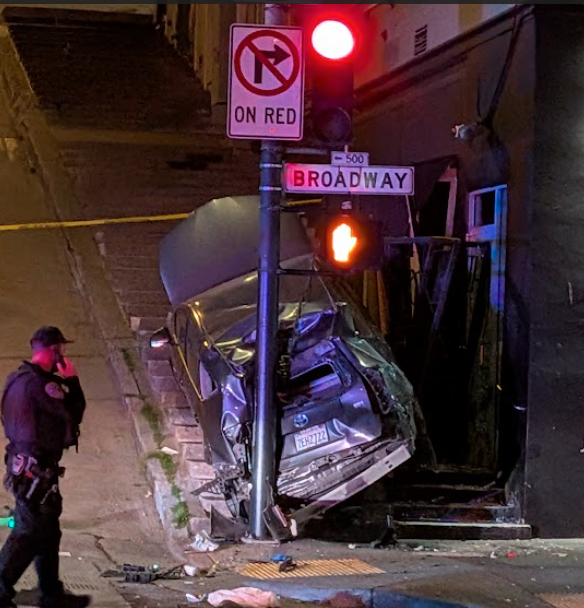
Motorist Careens onto North Beach Sidewalk, Killing Pedestrian
Driver kills pedestrian at another location where a safety project festered
The post Motorist Careens onto North Beach Sidewalk, Killing Pedestrian appeared first on Streetsblog San Francisco.