Today’s McMansions, Tomorrow’s Tenements

This weekend’s must-read article is “The Next Slum?” by Christopher B. Leinberger in the Atlantic Monthly. He posits that the suburban American dream that was launched at the 1939 New York City World’s Fair appears to be running out of gas. Emerging in its place is the growing desire of many Americans to live in more walkable, urban neighborhoods and the catastrophic deterioration of Pleasantville, USA:
Strange days are upon the residents of many a suburban cul-de-sac. Once-tidy yards have become overgrown, as the houses they front have gone vacant. Signs of physical and social disorder are spreading.
At Windy Ridge, a recently built starter-home development seven miles northwest of Charlotte, North Carolina, 81 of the community’s 132 small, vinyl-sided houses were in foreclosure as of late last year. Vandals have kicked in doors and stripped the copper wire from vacant houses; drug users and homeless people have furtively moved in. In December, after a stray bullet blasted through her son’s bedroom and into her own, Laurie Talbot, who’d moved to Windy Ridge from New York in 2005, told The Charlotte Observer, “I thought I’d bought a home in Pleasantville. I never imagined in my wildest dreams that stuff like this would happen…”
…For 60 years, Americans have pushed steadily into the suburbs, transforming the landscape and (until recently) leaving cities behind. But today the pendulum is swinging back toward urban living, and there are many reasons to believe this swing will continue. As it does, many low-density suburbs and McMansion subdivisions, including some that are lovely and affluent today, may become what inner cities became in the 1960s and ’70s-slums characterized by poverty, crime, and decay.
This scenario will be familiar to readers of James Howard Kunstler:
If you really want to understand the U.S. public’s penchant for wishful thinking, consider this: We invested most of our late twentieth-century wealth in a living arrangement with no future. American suburbia represents the greatest misallocation of resources in the history of the world. The far-flung housing subdivisions, commercial highway strips, big-box stores, and all the other furnishings and accessories of extreme car dependence will function poorly, if at all, in an oil-scarce future. Period. This dilemma now entails a powerful psychology of previous investment, which is prompting us to defend our misinvestments desperately, or, at least, preventing us from letting go of our assumptions about their future value. Compounding the disaster is the unfortunate fact that the manic construction of ever more futureless suburbs (a.k.a. the “housing bubble”) has insidiously replaced manufacturing as the basis of our economy.

Read More:
Streetsblog has migrated to a new comment system. New commenters can register directly in the comments section of any article. Returning commenters: your previous comments and display name have been preserved, but you'll need to reclaim your account by clicking "Forgot your password?" on the sign-in form, entering your email, and following the verification link to set a new password — this is required because passwords could not be carried over during the migration. For questions, contact tips@streetsblog.org.
More from Streetsblog USA
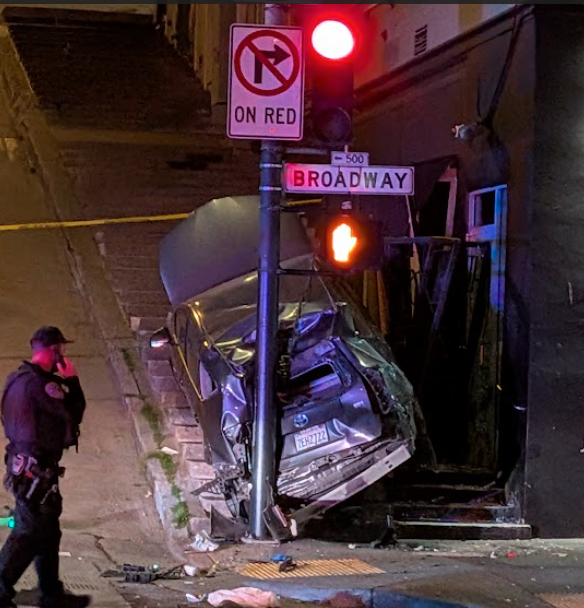
Motorist Careens onto North Beach Sidewalk, Killing Pedestrian
Driver kills pedestrian at another location where a safety project festered
The post Motorist Careens onto North Beach Sidewalk, Killing Pedestrian appeared first on Streetsblog San Francisco.